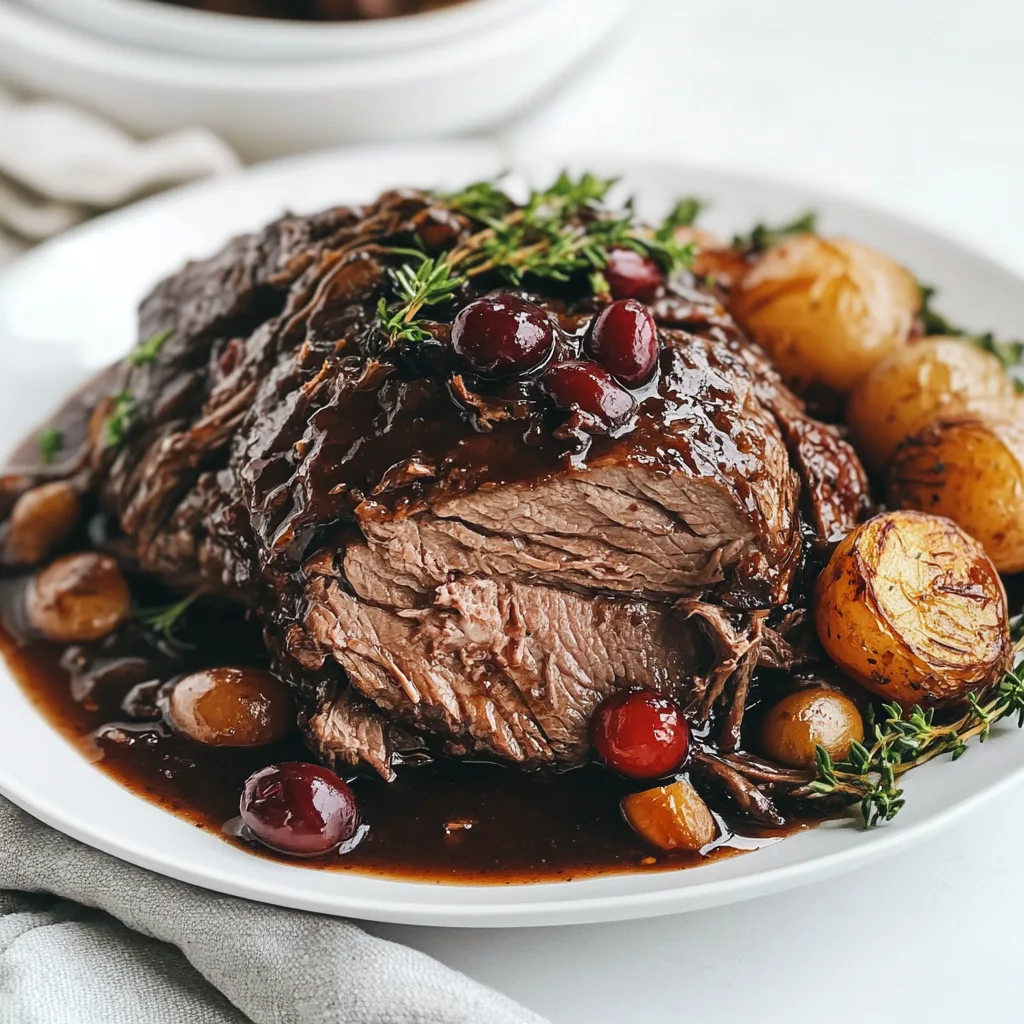
Slow-Braised Beef Roast with Cranberry Balsamic Glaze is the ultimate winter comfort food that transforms an ordinary Sunday dinner into a memorable feast. The magic happens when a humble beef roast meets sweet-tart cranberries and rich balsamic vinegar in a slow dance that lasts for hours. I discovered this recipe during a particularly snowy weekend when I needed something that would fill my home with irresistible aromas while I curled up with a good book. The deep savory notes paired with the subtle sweetness of the glaze creates a dish that’s both elegant enough for holiday gatherings and comforting enough for family dinners. Similar to my Hearty Beef and Vegetable Soup, this roast delivers incredible flavor with minimal hands-on effort.
Table of Contents
Recipe
Print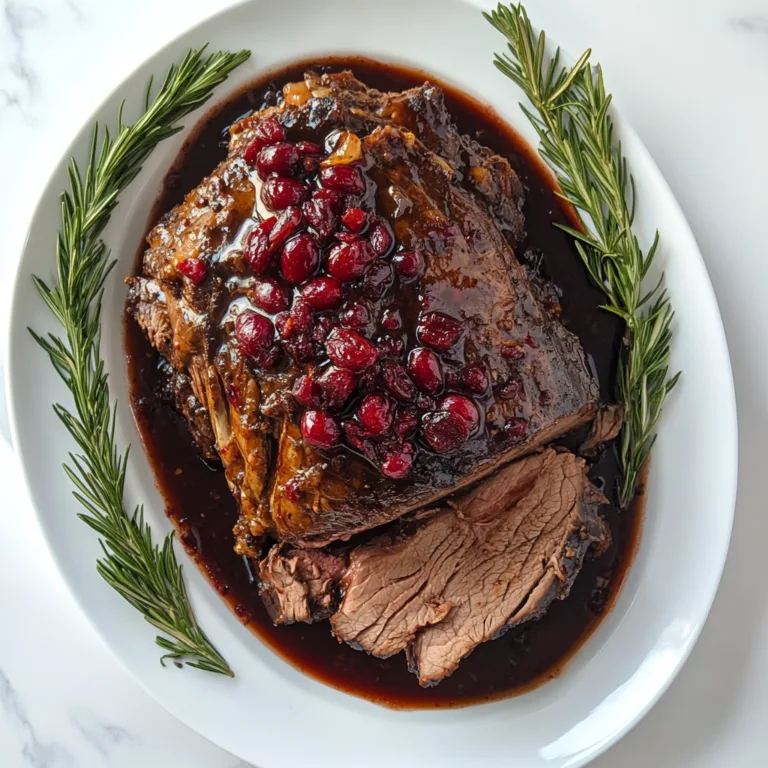
Slow-Braised Beef Roast with Cranberry Balsamic Glaze | Tender, Flavorful Recipe
This Slow-Braised Beef Roast with Cranberry Balsamic Glaze is rich, tender, and deeply flavorful. A perfect balance of savory beef, tangy cranberries, and sweet balsamic reduction makes it holiday-worthy and dinner-party impressive.
- Total Time: 3 hours 50 minutes
- Yield: 6 servings 1x
Ingredients
**For the Roast:**
3–4 lb chuck roast
1 tbsp olive oil
Salt and pepper, to taste
1 onion, sliced
3 cloves garlic, minced
1 cup beef broth
1/2 cup balsamic vinegar
1/2 cup whole berry cranberry sauce
1 tbsp Dijon mustard
1 tbsp brown sugar
2 sprigs fresh rosemary or 1 tsp dried
2 bay leaves
**For the Glaze:**
1/4 cup balsamic vinegar
1/4 cup cranberry sauce
1 tbsp brown sugar
Instructions
1. Preheat oven to 325°F (165°C).
2. Season the beef roast generously with salt and pepper.
3. Heat olive oil in a large Dutch oven over medium-high heat. Sear roast on all sides until browned, 3–4 minutes per side. Remove and set aside.
4. In the same pot, add onions and garlic. Sauté 2–3 minutes.
5. Stir in beef broth, balsamic vinegar, cranberry sauce, Dijon mustard, brown sugar, rosemary, and bay leaves.
6. Return the roast to the pot, cover, and transfer to the oven.
7. Braise for 3–3.5 hours, or until beef is fork-tender.
8. Remove beef and let rest. Discard bay leaves and rosemary stems.
9. To make the glaze, simmer remaining sauce with extra balsamic, cranberry sauce, and brown sugar for 5–7 minutes until thickened.
10. Slice or shred roast and drizzle with warm glaze before serving.
Notes
Serve with mashed potatoes, roasted carrots, or polenta.
This recipe works beautifully in a slow cooker—braise on LOW for 8 hours.
The glaze can be made ahead and reheated before serving.
- Prep Time: 20 minutes
- Cook Time: 3 hours 30 minutes
- Category: Dinner, Holiday, Roast
- Method: Braised
- Cuisine: American
Nutrition
- Serving Size: 6 oz beef + glaze
- Calories: 480
- Sugar: 9g
- Sodium: 590mg
- Fat: 28g
- Saturated Fat: 12g
- Unsaturated Fat: 15g
- Trans Fat: 0g
- Carbohydrates: 12g
- Fiber: 1g
- Protein: 38g
- Cholesterol: 110mg
Keywords: braised beef roast, cranberry balsamic glaze, holiday beef, chuck roast recipe
Why You’ll Love This Slow-Braised Beef Roast with Cranberry Balsamic Glaze
Perfect for Entertaining
This roast is my secret weapon for stress-free entertaining. The low-and-slow cooking method means you can prep everything hours before guests arrive, allowing you to be a relaxed host rather than a frazzled cook. I love how the cranberry balsamic glaze develops a gorgeous shine that makes for a stunning presentation when sliced at the table. The best part? Your home will be filled with an intoxicating aroma that welcomes guests the moment they step through the door. The combination of herbs, beef, and sweet-tart cranberries creates an ambiance no candle can replicate.
Foolproof Technique
Even if you’re new to braising, this recipe is nearly impossible to mess up. The forgiving nature of slow-cooking means the meat becomes more tender the longer it cooks. I remember the first time I made this dish—I was terrified of overcooking the expensive cut of beef, but discovered that’s exactly what makes it special. The collagen in the meat breaks down gradually, creating that melt-in-your-mouth texture we all crave. The cranberry balsamic glaze develops complexity over time, with the fruit breaking down and infusing the sauce with the perfect balance of sweetness and acidity.
Essential Tips & Tricks
Selecting the Perfect Cut
The foundation of an exceptional slow-braised beef roast begins with choosing the right cut of meat. I recommend chuck roast, brisket, or bottom round for their abundant marbling and connective tissue. These cuts transform magically during the long cooking process, becoming fork-tender while remaining juicy. When shopping, look for deep red meat with white fat marbling throughout—this is your guarantee of flavor. I’ve learned that developing a relationship with a local butcher can be invaluable; they’ll often set aside the best cuts and offer advice tailored to your recipe. For another delicious beef option, try my Gluten-Free Beef Stew with Veggies.
The Crucial Searing Step
Never skip the initial searing step! This flavor-building technique creates the Maillard reaction—the scientific name for that gorgeous brown crust that adds incredible depth to your final dish. I use a heavy cast-iron Dutch oven heated until it’s smoking hot, then add a high smoke-point oil like avocado or grapeseed. The satisfying sizzle when the meat hits the hot surface is music to my ears! Work in batches to avoid overcrowding, which causes steaming instead of searing. Those browned bits stuck to the bottom of the pan (called fond) will dissolve during braising, infusing your sauce with complex, umami flavors.
Serving Ideas & Creative Variations
Complementary Side Dishes
This roast deserves worthy companions on the plate. I love serving it with creamy mashed potatoes that create the perfect vehicle for soaking up the luscious cranberry balsamic sauce. For a lighter option, try roasted root vegetables—parsnips, carrots, and turnips develop a caramelized sweetness that echoes the flavors in the glaze. A simple green vegetable like steamed broccolini or sautéed green beans adds color and freshness. For special occasions, I make Yorkshire puddings that puff up gloriously and create little cups for extra sauce. The contrast between the tender beef and the crisp-edged sides creates a textural symphony that elevates the entire meal.
Seasonal Adaptations
While cranberries shine during fall and winter, this recipe is adaptable year-round. In spring, try fresh cherries with a hint of orange zest for brightness. Summer calls for blackberries or plums that break down into a jammy consistency. For autumn, pears and apples create a harvest-inspired variation that pairs beautifully with the balsamic notes. You could also experiment with different vinegars—sherry vinegar adds nuttiness, while red wine vinegar brings a sharper tang. I once made this with pomegranate molasses instead of balsamic and it was a delightful Middle Eastern-inspired twist. For a complete seasonal feast, consider pairing with my Quinoa Power Salad.
Storage & Troubleshooting Guide
Making Ahead & Storing Leftovers
This roast actually improves with time, making it perfect for meal prep. After cooking, cool completely before refrigerating in an airtight container for up to 4 days. The flavors meld and deepen overnight, creating an even more delicious second-day experience. For freezing, slice the meat and store with sauce in freezer-safe containers for up to 3 months. I like to portion leftovers into individual servings for quick weeknight dinners. To reheat, thaw overnight in the refrigerator if frozen, then warm gently in a covered dish in a 325°F oven with a splash of beef broth to maintain moisture. Avoid microwave reheating which can toughen the meat.
Troubleshooting Common Issues
If your roast isn’t as tender as expected, it likely needs more time. The collagen breakdown process cannot be rushed—return it to the oven and check every 30 minutes until fork-tender. For a thin sauce, remove the meat and reduce the liquid over medium-high heat until it reaches your desired consistency. If the sauce is too tart, balance with a teaspoon of honey or brown sugar. Too sweet? Add a splash of red wine vinegar or lemon juice. If the sauce separates, whisk in a cornstarch slurry (1 tablespoon cornstarch mixed with 2 tablespoons cold water) while simmering. Remember that patience is key—most braising issues can be solved with additional cooking time.
Frequently Asked Questions
Can I make Slow-Braised Beef Roast with Cranberry Balsamic Glaze in a slow cooker?
Absolutely! Sear the meat first, then transfer to your slow cooker with all ingredients. Cook on low for 8-10 hours until fork-tender. The glaze might need reducing on the stovetop afterward.
What’s the best cut of beef to use?
Chuck roast or bottom round are ideal for their marbling and connective tissue. They become incredibly tender during the long cooking process while remaining juicy and flavorful.
Can I use frozen cranberries?
Yes! No need to thaw—add them directly to the pot. They may take slightly longer to break down, but will release their juices beautifully during braising.
How do I know when the roast is done?
The meat should easily pull apart with a fork. If you meet resistance, continue cooking. A thermometer should register around 205°F for that perfect fall-apart texture.
Can I prepare this dish ahead for a dinner party?
Definitely! Make it 1-2 days ahead and refrigerate. The flavors actually improve overnight. Reheat gently in a 325°F oven until warmed through.
Final Thoughts
This Slow-Braised Beef Roast with Cranberry Balsamic Glaze has become my signature dish for good reason. The rich, complex flavors develop effortlessly while you’re free to enjoy your day, making it perfect for both special occasions and elevated Sunday dinners. I find there’s something deeply satisfying about transforming simple ingredients into something so spectacular through the gentle magic of time and temperature. The way the cranberries melt into the sauce, creating that perfect sweet-tart balance against the savory meat, makes this dish truly unforgettable. I hope it brings as much joy to your table as it has to mine!