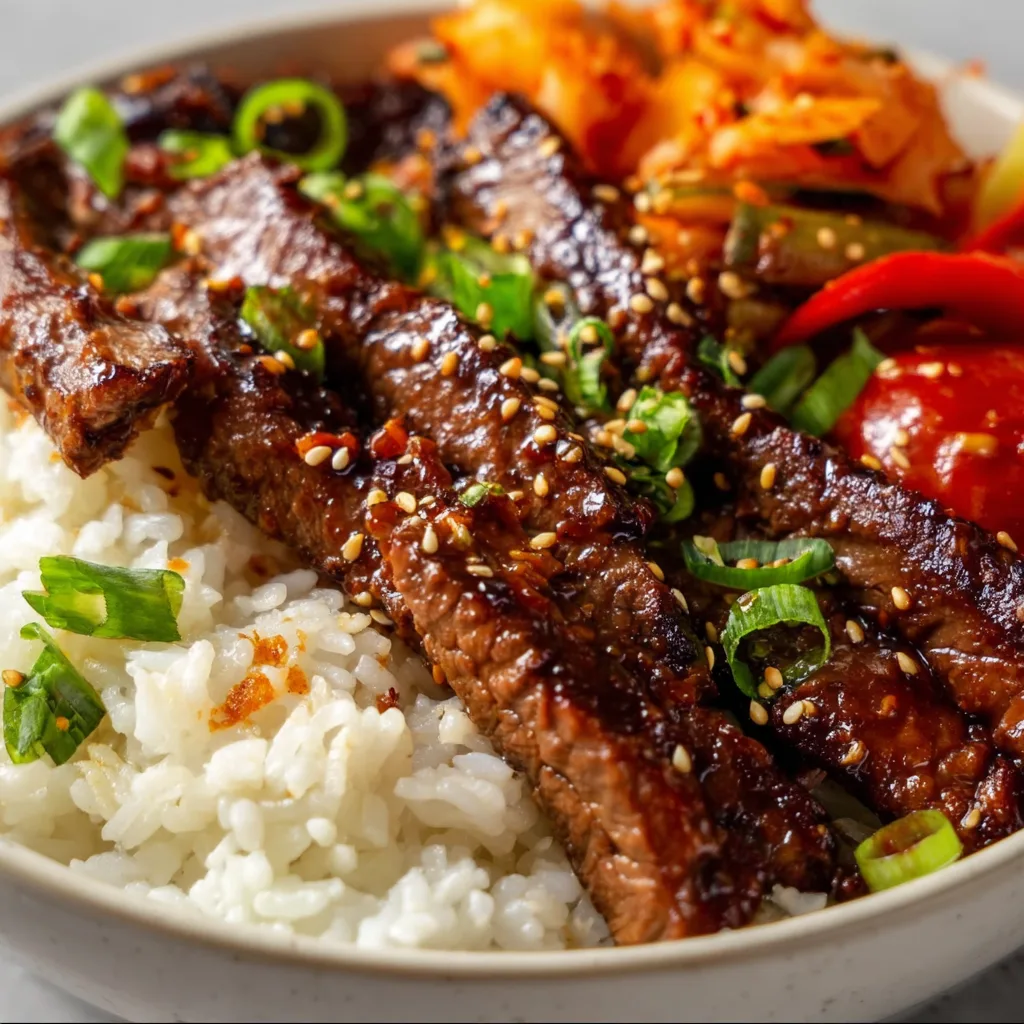
Korean BBQ Steak Rice Bowls bring the vibrant flavors of Korean cuisine right to your dinner table with minimal effort and maximum satisfaction. The tender slices of marinated steak, caramelized to perfection, rest atop a bed of fluffy rice alongside colorful vegetables that create a feast for both eyes and palate. I discovered my love for these bowls during a rainy weekend when takeout wasn’t an option, and now they’ve become my go-to when I crave something bold and comforting that doesn’t require hours in the kitchen. The sweet-savory balance of the marinade creates an irresistible glaze that will have you scraping the plate for every last drop.
Table of Contents
Recipe
Print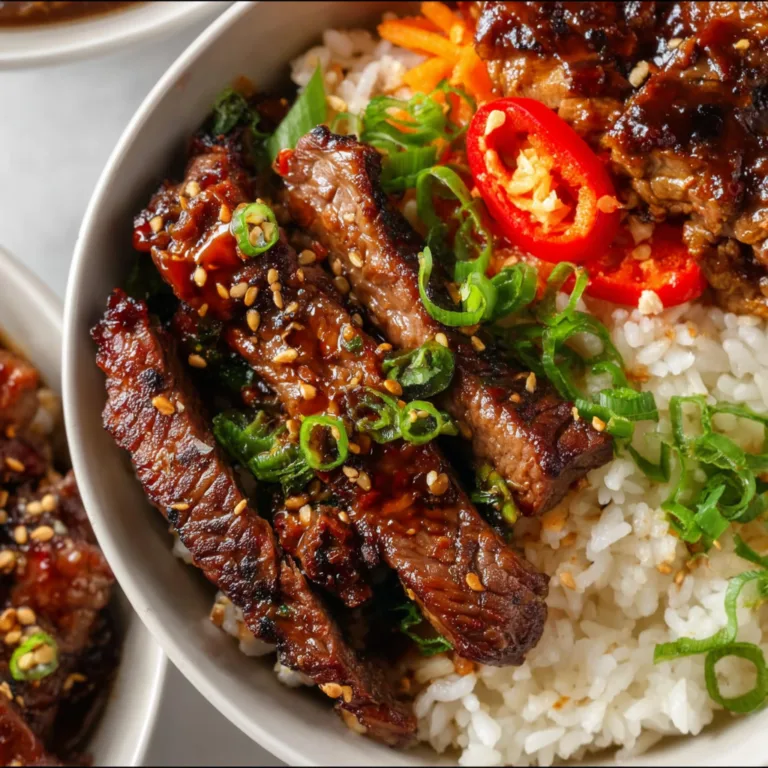
Delicious Korean BBQ Steak Rice Bowls | Easy & Flavorful Recipe
These Korean BBQ steak rice bowls are loaded with tender, marinated beef, fluffy rice, and crisp veggies—all drizzled with a sweet-savory gochujang sauce. It’s a bold, balanced meal that’s fast enough for weeknights and delicious enough for guests!
- Total Time: 20 minutes (+marinate time)
- Yield: 4 servings 1x
Ingredients
1 lb flank steak or sirloin, thinly sliced
2 cups cooked jasmine or short-grain rice
**Korean Marinade:**
3 tbsp soy sauce
1 tbsp brown sugar
1 tbsp sesame oil
1 tbsp rice vinegar
2 garlic cloves, minced
1 tsp grated ginger
1 tbsp gochujang (Korean chili paste)
1 tsp sesame seeds (optional)
**Toppings:**
1 cup shredded carrots
1 cup cucumber, thinly sliced
1/2 cup kimchi (optional)
2 green onions, sliced
Fried egg (optional)
Extra sesame seeds for garnish
Instructions
1. In a bowl, whisk together soy sauce, brown sugar, sesame oil, vinegar, garlic, ginger, and gochujang.
2. Add sliced steak to the marinade and let sit for at least 30 minutes (or up to overnight in fridge).
3. Heat a skillet or grill pan over medium-high heat. Sear steak slices in batches until browned and cooked through, about 1–2 minutes per side.
4. Warm rice and divide among bowls.
5. Top with cooked steak, fresh veggies, green onions, and optional fried egg or kimchi.
6. Drizzle with extra marinade (boiled briefly if reused) or gochujang sauce. Sprinkle with sesame seeds and serve.
Notes
• Thinly slicing the steak against the grain keeps it tender.
• Use cauliflower rice for a low-carb version.
• Make it spicy by adding sriracha or extra gochujang on top.
- Prep Time: 10 minutes
- Cook Time: 10 minutes
- Category: Dinner, Rice Bowl, Asian-Inspired
- Method: Stovetop, Grilling
- Cuisine: Korean Fusion
Nutrition
- Serving Size: 1 bowl
- Calories: 510
- Sugar: 7g
- Sodium: 680mg
- Fat: 22g
- Saturated Fat: 6g
- Unsaturated Fat: 12g
- Trans Fat: 0g
- Carbohydrates: 42g
- Fiber: 2g
- Protein: 35g
- Cholesterol: 85mg
Keywords: korean bbq steak rice bowl, gochujang beef bowl, easy korean rice recipe, korean steak dinner idea
Why You’ll Love These Korean BBQ Steak Rice Bowls
Perfect Weeknight Solution
These Korean BBQ Steak Rice Bowls are the answer to your “what’s for dinner” dilemma when time is tight but you refuse to compromise on flavor. The marinade does most of the heavy lifting, infusing the meat with deep umami notes while you attend to other things. I love how the thinly sliced beef cooks in minutes, making this dish faster than ordering takeout. The combination of soy sauce, brown sugar, and sesame creates that authentic Korean flavor profile that transforms ordinary steak into something extraordinary, all while keeping your actual hands-on cooking time under 30 minutes.
Customizable for Everyone
One of my favorite aspects of these rice bowls is how easily they adapt to different preferences and dietary needs. The versatile base recipe works beautifully with whatever protein you have on hand—swap the steak for chicken thighs, pork tenderloin, or even firm tofu for a vegetarian version. My nephew is a picky eater, but he devours these bowls when I let him choose his own toppings. You can adjust the spice level by controlling the gochujang (Korean chili paste) amount, making it family-friendly or bringing the heat for spice lovers. Everyone gets exactly what they want!
Essential Tips & Tricks
Perfecting the Marinade
The soul of Korean BBQ lies in its marinade, and getting it right transforms your dish from good to unforgettable. For the deepest flavor penetration, marinate your steak for at least 2 hours, though overnight works wonders if you can plan ahead. I learned the hard way that adding a touch of grated Asian pear or kiwi to the marinade creates natural tenderizers that break down the meat fibers beautifully. The balance of sweet (brown sugar), savory (soy sauce), and aromatic elements (garlic and ginger) creates that authentic Korean flavor profile. Don’t skip the sesame oil—it’s that distinctive nutty finish that makes people ask for your recipe!
Slicing and Cooking Techniques
The way you slice and cook your steak makes all the difference in these Korean BBQ Steak Rice Bowls. Always slice your meat against the grain and as thinly as possible—pop it in the freezer for 20 minutes first to make this easier. When cooking, use a screaming hot pan or grill to achieve that beautiful caramelization without overcooking the thin slices. I love watching the edges curl and caramelize in just 1-2 minutes per side. This high-heat cooking method reminds me of watching street food vendors in Seoul work their magic, creating those delicious crispy bits that add texture and intense flavor to every bite.
Serving Ideas & Creative Variations
Beautiful Bowl Assembly
Creating an Instagram-worthy Korean BBQ Steak Rice Bowl is all about thoughtful assembly and color contrast. Start with a base of rice (white, brown, or cauliflower rice all work beautifully), then arrange your beef and vegetables in sections rather than mixing everything together. I love adding quick-pickled vegetables for brightness—thinly sliced cucumbers, carrots, or radishes soaked in rice vinegar for just 15 minutes create that perfect tangy counterpoint. A sprinkle of sesame seeds, thinly sliced green onions, and a small dollop of gochujang sauce creates visual appeal and flavor depth. Remember, we eat with our eyes first!
Exciting Fusion Options
Don’t be afraid to venture beyond traditional Korean BBQ Steak Rice Bowls with some creative fusion ideas. One of my favorite variations is a Korean-Mexican mashup with the addition of fresh avocado slices, lime wedges, and even a sprinkle of crumbled cotija cheese. Another winning combination is adding roasted honey garlic carrots for sweetness and texture contrast. For a breakfast spin, top your leftover rice and beef with a fried egg whose runny yolk creates a silky sauce that ties everything together. These playful variations keep the meal exciting even when you make it regularly.
Storage & Troubleshooting Guide
Meal Prep & Leftovers
Korean BBQ Steak Rice Bowls make exceptional meal prep options that actually improve with a day in the refrigerator as flavors meld. Store components separately—marinated cooked beef, rice, and vegetables—in airtight containers for up to 4 days. I’ve found that reheating the beef with a splash of water in a covered microwave container for 30-45 seconds prevents it from drying out. For the freshest experience, keep raw garnishes like green onions and sesame seeds separate until serving time. If you’re planning to freeze portions, slightly undercook the beef as it will continue cooking during the reheating process.
Fixing Common Issues
Even experienced cooks occasionally encounter challenges with Korean BBQ Steak Rice Bowls. If your beef turns out tough, it’s likely either sliced with the grain instead of against it, or cooked too long. The solution is quick cooking at high heat—literally 1-2 minutes per side for thin slices. For marinade that burns too quickly in the pan (a common issue due to the sugar content), wipe excess marinade before cooking and watch the heat level carefully. If your dish lacks that signature Korean flavor punch, try adding a splash of fish sauce or more gochujang to amp up the umami. Remember that balancing sweet, salty, and spicy elements is key.
Frequently Asked Questions
What cut of beef works best for Korean BBQ Steak Rice Bowls?
Ribeye or sirloin are ideal choices, offering the perfect balance of tenderness and flavor. Flank steak also works well when sliced thinly against the grain and marinated properly.
Can I make these bowls vegetarian?
Absolutely! Substitute the beef with extra-firm tofu, tempeh, or portobello mushrooms. Marinate them just as you would the steak for maximum flavor absorption.
How spicy are authentic Korean BBQ Steak Rice Bowls?
Traditional bowls have moderate heat, but you can easily adjust by controlling the amount of gochujang (Korean chili paste) in your marinade and sauce.
What’s the best rice to use?
Short-grain white rice is traditional, but brown rice, jasmine rice, or even cauliflower rice work wonderfully depending on your preference and dietary needs.
How do I achieve that restaurant-quality caramelization?
Use a very hot cast iron pan or grill, cook in small batches to prevent overcrowding, and don’t stir constantly—give the meat time to develop that beautiful sear.
Final Thoughts
Korean BBQ Steak Rice Bowls represent everything I love about home cooking—they’re adaptable, impressive yet approachable, and absolutely packed with flavor. The combination of tender marinated beef, colorful vegetables, and perfectly cooked rice creates a complete meal that satisfies on every level. Whether you’re cooking for yourself, your family, or guests, these bowls offer endless possibilities for personalization while maintaining that distinctive Korean BBQ character. Find more inspiration for your next culinary adventure on my Pinterest board where I’m always adding new flavor combinations and serving ideas.