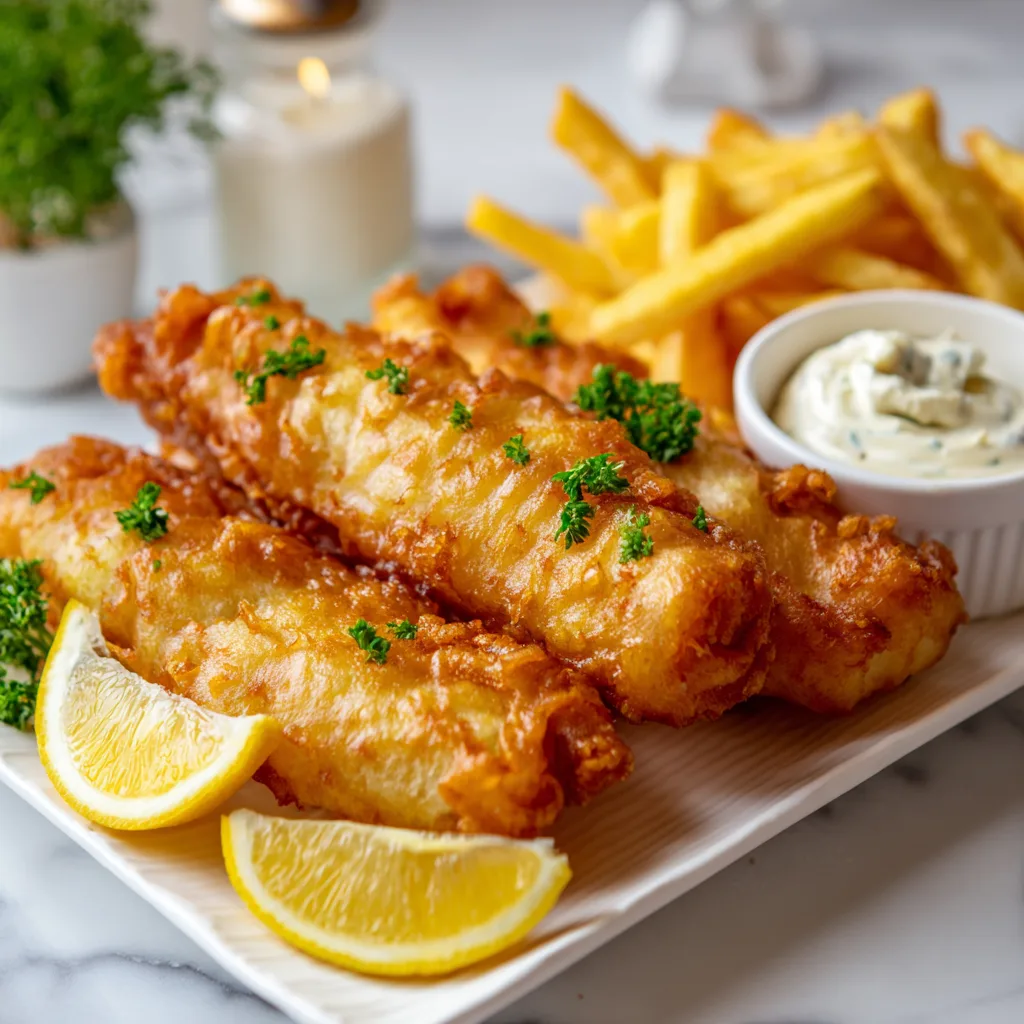
Classic British Fish & Chips brings the seaside to your kitchen with that perfect combination of crispy, golden batter and tender, flaky fish that we all crave. I still remember my first proper fish and chips experience during a rainy afternoon in London—newspaper wrapping, malt vinegar, and that distinctive crunch giving way to steaming hot fish inside. There’s something deeply comforting about this iconic dish that has stood the test of time. Today, I’m sharing my foolproof recipe that delivers that authentic British chippy experience right at home, complete with perfectly crisp chips and that signature golden batter that will transport you straight to the English seaside.
Table of Contents
Recipe
Print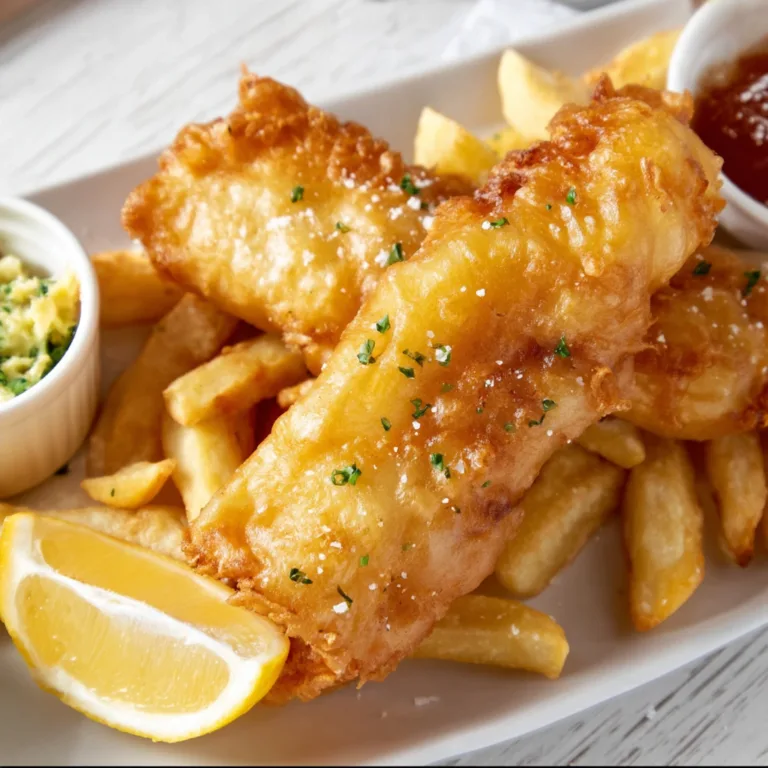
Classic British Fish & Chips
This Classic British Fish & Chips recipe delivers the perfect balance of crispy golden batter and tender white fish. Paired with thick-cut fries and malt vinegar, it’s a traditional and satisfying pub-style meal made right at home.
- Total Time: 45 minutes
- Yield: 4 servings 1x
Ingredients
4 fillets cod or haddock (5–6 oz each)
1 cup all-purpose flour (plus extra for dredging)
1 tsp baking powder
1/2 tsp salt
1/4 tsp black pepper
1 cup cold sparkling water or beer
4 large russet potatoes, peeled and cut into thick chips
Oil for deep frying
Malt vinegar, lemon wedges, and tartar sauce (for serving)
Instructions
1. Soak cut potatoes in cold water for 30 minutes to remove excess starch. Drain and pat dry.
2. Heat oil in a deep fryer or large pot to 350°F (175°C).
3. Blanch the chips in batches for 3–4 minutes until soft but not golden. Drain on paper towels.
4. In a bowl, whisk flour, baking powder, salt, and pepper. Gradually add cold sparkling water or beer until smooth.
5. Lightly dredge fish fillets in extra flour. Dip into batter, letting excess drip off.
6. Fry fish for 6–8 minutes until golden brown and crisp. Remove and drain.
7. Increase oil to 375°F (190°C). Fry chips a second time for 2–3 minutes until golden and crispy.
8. Serve fish and chips hot with lemon wedges, malt vinegar, and tartar sauce.
Notes
Keep the batter cold for maximum crispiness.
Double-frying the chips ensures a fluffy interior and crisp exterior.
Use a wire rack to drain fried food instead of paper towels for better texture.
- Prep Time: 20 minutes
- Cook Time: 25 minutes
- Category: Dinner, Fried, Classic Recipes
- Method: Deep Frying
- Cuisine: British, Pub Food
Nutrition
- Serving Size: 1 fish fillet with chips
- Calories: 630
- Sugar: 1g
- Sodium: 520mg
- Fat: 32g
- Saturated Fat: 6g
- Unsaturated Fat: 24g
- Trans Fat: 0g
- Carbohydrates: 58g
- Fiber: 4g
- Protein: 28g
- Cholesterol: 70mg
Keywords: classic fish and chips, british fish recipe, crispy fried fish, traditional fish and fries
Why You’ll Love This Classic British Fish & Chips
The Perfect Crispy Batter Secret
The magic of proper fish and chips lies in that ethereal batter—light yet crispy, with a beautiful golden color that makes your mouth water before you even take a bite. I’ve tested countless variations and found that cold carbonated water is absolutely essential for creating those tiny air bubbles that make the batter light and crisp. Adding a touch of vodka (which evaporates quickly) further prevents gluten development, giving you that shatteringly crisp coating that stands up to a generous splash of malt vinegar without going soggy. The temperature contrast between cold batter and hot oil creates that perfect crunch.
Restaurant-Quality Chips at Home
Let’s be honest—soggy chips are a disappointment. The secret to achieving those perfectly crisp-outside, fluffy-inside chips is a double-frying technique. First, a lower-temperature blanch that cooks the potatoes through, then a rest period, followed by a higher-temperature fry that creates that golden exterior. Russet potatoes work best here due to their starch content. I like to cut them slightly thicker than French fries but not as chunky as steak fries—about 1/2 inch thick gives that authentic British chip shop experience. A quick soak in cold water removes excess starch for extra crispness.
Essential Tips & Tricks
Oil Temperature Control
Maintaining the right oil temperature is perhaps the most critical factor for successful fish and chips. Too cool, and your food absorbs oil and becomes greasy; too hot, and the outside burns before the inside cooks. Invest in a good thermometer and aim for 325°F (163°C) for the first chip fry, 350°F (175°C) for fish, and 375°F (190°C) for the final chip fry. I learned the hard way that crowding the pan drastically drops the temperature, so work in small batches. Between batches, allow the oil to return to temperature—patience here results in that perfect golden crispiness that makes Crispy Fried Oyster Mushrooms so irresistible too.
Fish Selection and Preparation
The best fish for classic fish and chips should be white, firm, and mild-flavored. Traditional choices include cod or haddock, though pollock and halibut work beautifully too. Whatever you choose, freshness is non-negotiable. Pat the fish completely dry before battering—moisture is the enemy of crispiness. I prefer cutting the fish into 4-5 ounce portions that cook evenly and quickly. A light dusting of flour before dipping in batter helps the batter adhere perfectly. For extra flavor, season your fish with salt and a squeeze of lemon juice about 15 minutes before cooking.
Serving Ideas & Creative Variations
Traditional British Accompaniments
Authentic fish and chips isn’t complete without the proper sides. Malt vinegar is absolutely traditional—sprinkled liberally over both fish and chips to cut through the richness. Tartar sauce made with capers, gherkins, and fresh herbs adds creamy tanginess. Mushy peas (bright green peas cooked down with a touch of mint) provide a sweet, fresh contrast. In the UK, you might also find curry sauce, pickled onions, or bread and butter on the side. For a fun presentation, serve in paper cones or wrapped in parchment paper (skip the newspaper—modern inks aren’t food-safe). This makes a perfect pairing with Garlic Butter Chicken Broccoli for a complete meal.
Modern Twists on the Classic
While I’m a purist at heart, there are delicious ways to update this classic. Try a beer batter using a hoppy IPA for complex flavor, or add spices like paprika, cayenne, or Old Bay to the batter for heat. For a lighter version, try panko breadcrumbs instead of batter, or use an air fryer (though the results are different from traditional). The chips can be upgraded with seasonings like rosemary and garlic, truffle oil, or even a sprinkle of parmesan. For a fun fusion twist, serve with wasabi mayo, sriracha ketchup, or a mango-habanero sauce instead of traditional tartar sauce.
Storage & Troubleshooting Guide
Keeping Fish & Chips Crispy
Let’s face it—fish and chips are at their absolute best eaten immediately, when that contrast between crispy exterior and steaming interior is perfect. However, if you need to hold them for a short time, place on a wire rack in a low oven (200°F/95°C) rather than covering, which traps steam and creates sogginess. For leftovers (though rare in my house!), reheat in a 375°F (190°C) oven on a wire rack until crisp and heated through—never use the microwave, which will make the batter chewy. The chips can be refreshed the same way, though they’ll never quite match the glory of freshly fried.
Solving Common Problems
If your batter is sliding off the fish, the likely culprit is moisture or oil temperature. Ensure fish is thoroughly dried and your oil is hot enough (350°F/175°C). For batter that’s too thick, add more carbonated water; too thin, a bit more flour. If your chips are soft instead of crispy, the oil was likely too cool or they were crowded in the pan. Double-frying is essential for chip crispness. If everything is browning too quickly before cooking through, your oil is too hot. Remember that fresh oil browns less quickly than used oil, so adjust temperatures accordingly as you continue frying.
Frequently Asked Questions
What’s the best fish for authentic British fish and chips?
Cod and haddock are most traditional, with cod being slightly sweeter and haddock more flavorful. Both have the perfect flaky texture that holds up well to frying.
Can I make Classic British Fish & Chips without a deep fryer?
Yes! A heavy-bottomed Dutch oven works perfectly. Fill it no more than halfway with oil, use a thermometer, and maintain proper temperatures throughout cooking.
How do I know when the fish is cooked through?
The batter should be golden brown and crisp after about 5-6 minutes of frying. The fish inside should be opaque and flake easily with a fork.
Can I prepare any components ahead of time?
You can cut and soak the potatoes up to 24 hours ahead. The batter is best made just before cooking, as the carbonation helps create lightness.
Is there a gluten-free alternative for the batter?
Absolutely! Rice flour or a gluten-free flour blend works well. Add a bit of cornstarch for extra crispiness and ensure your beer (if using) is gluten-free.
Final Thoughts
Classic British Fish & Chips brings a taste of British culinary heritage to your table with relatively simple ingredients transformed through technique. There’s something magical about that first bite through crispy batter into tender fish, followed by a perfectly crisp chip. While it may take some practice to perfect, the results are well worth the effort. I hope this recipe brings you the same joy and satisfaction I feel when recreating this iconic dish at home. For more delicious recipes and inspiration, follow me on Pinterest where I’m always sharing new favorites!