
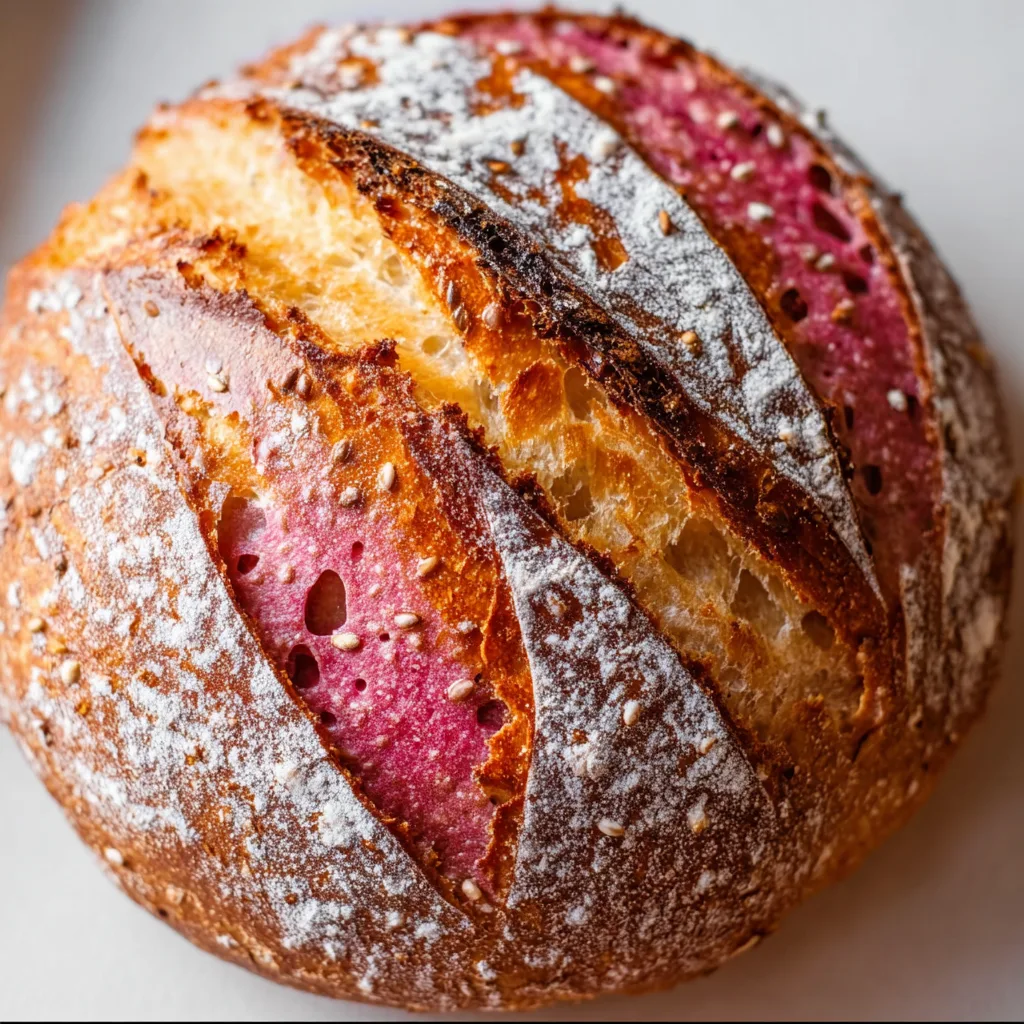
Pink Sourdough Bread has become my absolute obsession lately. There’s something magical about slicing into that rosy-hued loaf and seeing the perfect crumb structure inside. I first experimented with this vibrant twist on traditional sourdough after spotting beetroot powder at my local health food store. The natural coloring creates a showstopping bread that’s as delicious as it is beautiful. The subtle earthy sweetness pairs perfectly with the signature sourdough tang, creating a bread that’s impossible to resist. Trust me, once you’ve mastered this recipe, your bread basket will never be the same again!
Table of Contents
Recipe
Print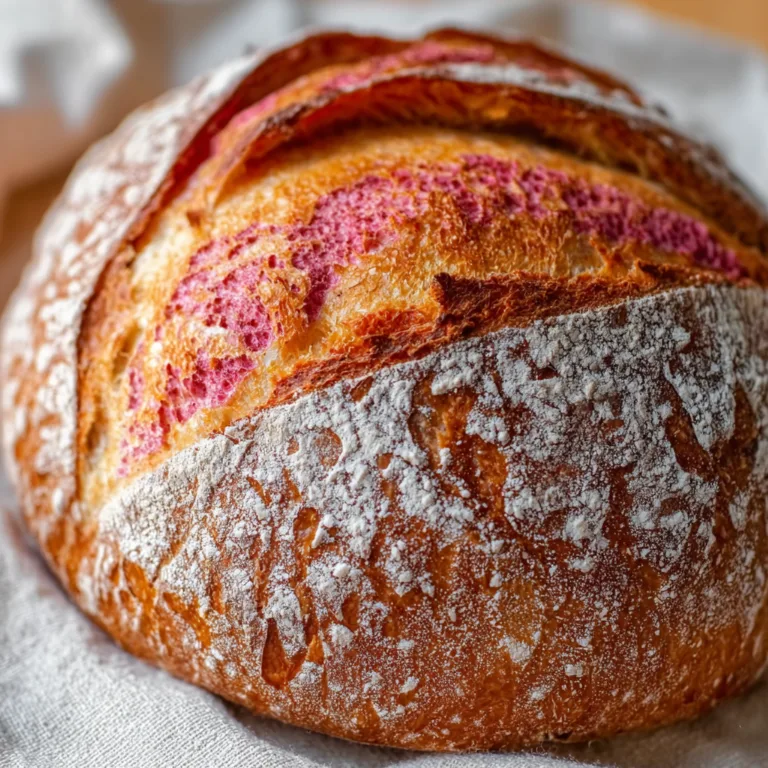
Delicious Pink Sourdough Bread Recipe
This Delicious Pink Sourdough Bread is a soft, tangy loaf with a vibrant natural color. Made with sourdough starter and a touch of beetroot or natural coloring, it’s as beautiful as it is flavorful.
- Total Time: 6–8 hours
- Yield: 1 loaf (8 servings) 1x
Ingredients
For the Dough:
3 cups bread flour
1 cup active sourdough starter
3/4 cup warm water
1 teaspoon salt
1/2 cup beet puree or natural pink coloring
Optional:
Sesame seeds or herbs for topping
Instructions
1. In a bowl, mix sourdough starter, water, and beet puree until combined.
2. Add flour and salt, mixing into a dough.
3. Knead until smooth and elastic.
4. Cover and let rise for 4–6 hours until doubled in size.
5. Shape dough into a loaf.
6. Let rise again for 1–2 hours.
7. Preheat oven to 220°C (425°F).
8. Score the top of the loaf.
9. Bake for 30–35 minutes until crust is golden and crisp.
10. Let cool completely before slicing.
Notes
Use beet puree for natural color and subtle sweetness.
Allow enough fermentation time for best flavor.
Do not cut while hot to maintain texture.
Store in a bread bag or airtight container.
- Prep Time: 20 minutes + rising
- Cook Time: 35 minutes
- Category: Bread
- Method: Baking
- Cuisine: Artisan
- Diet: Vegan
Nutrition
- Serving Size: 1 slice
- Calories: 160
- Sugar: 2 g
- Sodium: 220 mg
- Fat: 1 g
- Saturated Fat: 0 g
- Unsaturated Fat: 1 g
- Trans Fat: 0 g
- Carbohydrates: 32 g
- Fiber: 2 g
- Protein: 5 g
- Cholesterol: 0 mg
Keywords: pink sourdough bread, beet sourdough recipe, colorful bread, homemade sourdough, artisan bread
Why You’ll Love This Pink Sourdough Bread
A Stunning Visual Statement
The vibrant pink hue transforms an ordinary loaf into something extraordinary. I’ve served this at brunches and watched guests’ eyes widen with delight. The natural beetroot coloring distributes evenly throughout the dough, creating a consistent rosy shade that looks absolutely gorgeous when sliced. Beyond aesthetics, the beetroot adds subtle earthy notes that complement the sourdough’s tanginess. It’s the perfect way to elevate your bread game without artificial ingredients. My daughter calls it “princess bread,” and honestly, that’s exactly what it feels like—royally delicious!
Nutritional Benefits Beyond Beauty
This isn’t just a pretty face—pink sourdough packs serious nutritional benefits. The beetroot powder adds antioxidants, minerals, and vitamins that traditional sourdough doesn’t have. Plus, you still get all the gut-friendly benefits of fermentation from your sourdough starter. I’ve noticed improved digestion since incorporating this bread into my weekly baking routine. The natural fermentation process also makes nutrients more bioavailable, meaning your body can actually absorb more goodness from each slice. It’s a beautiful example of how something can be both visually stunning and nourishing.
Essential Tips & Tricks
Perfecting Your Pink Color
Achieving that perfect rosy hue requires some finesse. I’ve found that adding beetroot powder directly to your flour before mixing creates the most even color distribution. Start with 2 tablespoons per 500g flour and adjust based on your color preference. For a more vibrant pink, add the powder after autolyse but before bulk fermentation. Temperature matters too—keep your dough cooler (around 75°F) to preserve the color intensity during fermentation. If you’re looking for a deeper magenta shade, try adding a splash of hibiscus tea to your water measurement.
Starter Strength Matters
Your sourdough starter needs to be particularly vigorous for this recipe. Feed it twice daily for two days before baking to ensure maximum strength. I’ve found a 100% hydration starter works best, maintaining equal parts flour and water. Watch for the starter to double in size and become bubbly before using—this usually takes 4-6 hours after feeding. A strong starter ensures proper fermentation, which develops both flavor and structure. The natural acids in the beetroot can slightly affect fermentation, so giving your starter this extra boost compensates perfectly and results in that ideal open crumb we all strive for.
Serving Ideas & Creative Variations
Perfect Pairings for Pink Bread
This rosy loaf deserves thoughtful accompaniments that complement its unique character. I love serving thick slices with whipped goat cheese and a drizzle of honey—the creamy tanginess against the earthy bread is divine. For breakfast, try it toasted with ricotta and fresh berries to play up the pink theme. It also makes an incredible grilled cheese with fontina and caramelized onions. The subtle beetroot flavor pairs wonderfully with creamy miso butter beans for a hearty lunch. For a simple approach, good quality salted butter lets the bread’s flavor shine.
Seasonal and Dietary Adaptations
The versatility of this pink sourdough makes it perfect for customization. For spring celebrations, fold in dried rose petals and pistachios for a Persian-inspired variation. During summer, I add lemon zest and dried cherries for brightness. For gluten-sensitive folks, I’ve successfully made this with a 20% rice flour blend—though the rise isn’t quite as dramatic. To boost protein content, incorporate 1/4 cup hemp seeds into the dough. For a sweeter version perfect for holiday mornings, add a cinnamon-sugar swirl during shaping. Each variation maintains that gorgeous pink color while offering new flavor dimensions.
Storage & Troubleshooting Guide
Keeping Your Loaf Fresh
To maintain optimal freshness and texture, store your pink sourdough properly. I keep mine cut-side down on a wooden cutting board for the first day, which preserves the crust integrity while protecting the crumb. For longer storage, wrap in a clean cotton cloth then place in a paper bag—this prevents moisture buildup while allowing the bread to breathe. Avoid plastic, which makes the crust soft and can encourage mold. If you won’t consume the entire loaf within three days, slice and freeze it. Frozen slices can go directly into the toaster for nearly fresh-baked taste and texture.
Troubleshooting Common Issues
If your loaf isn’t turning the vibrant pink you expected, the culprit is usually the beetroot powder quality or quantity. Natural food stores offer the most potent options. For a dense crumb, your starter likely wasn’t active enough—ensure it passes the float test before mixing. If your crust is too thick or dark, lower your oven temperature by 25°F and use more steam during the first 15 minutes of baking. For inconsistent color, try dissolving the beetroot powder in your recipe water before adding to flour. Remember that sourdough requires patience—even imperfect loaves make excellent croutons or breadcrumbs.
Frequently Asked Questions
What gives this Pink Sourdough Bread its color?
The vibrant pink color comes from beetroot powder, which is natural, flavorful, and adds nutritional benefits without artificial coloring.
Can I make this bread if I’m new to sourdough baking?
Yes! Start with a mature starter from a friend or local bakery, follow the recipe precisely, and be patient with the fermentation process.
How does the beetroot affect the flavor?
It adds a subtle earthy sweetness that complements the tangy sourdough flavor without overpowering it.
Will the pink color fade during baking?
The color will deepen slightly but remain distinctly pink. Using high-quality beetroot powder ensures the best color retention.
Can I use other natural colorings instead of beetroot?
Absolutely! Try butterfly pea flower for blue bread, turmeric for yellow, or spirulina for green—each adds unique flavor notes.
Final Thoughts
This Pink Sourdough Bread has become more than just a recipe in my kitchen—it’s a conversation starter, a mood lifter, and a way to bring unexpected joy to everyday meals. The process of creating something both beautiful and delicious feels like a small act of everyday magic. I find myself looking forward to each loaf, experimenting with new variations while perfecting that signature rosy hue. Whether you’re an experienced baker or sourdough curious, this pink twist on a classic is worth adding to your repertoire. Find more colorful inspiration on my Pinterest board and happy baking!