
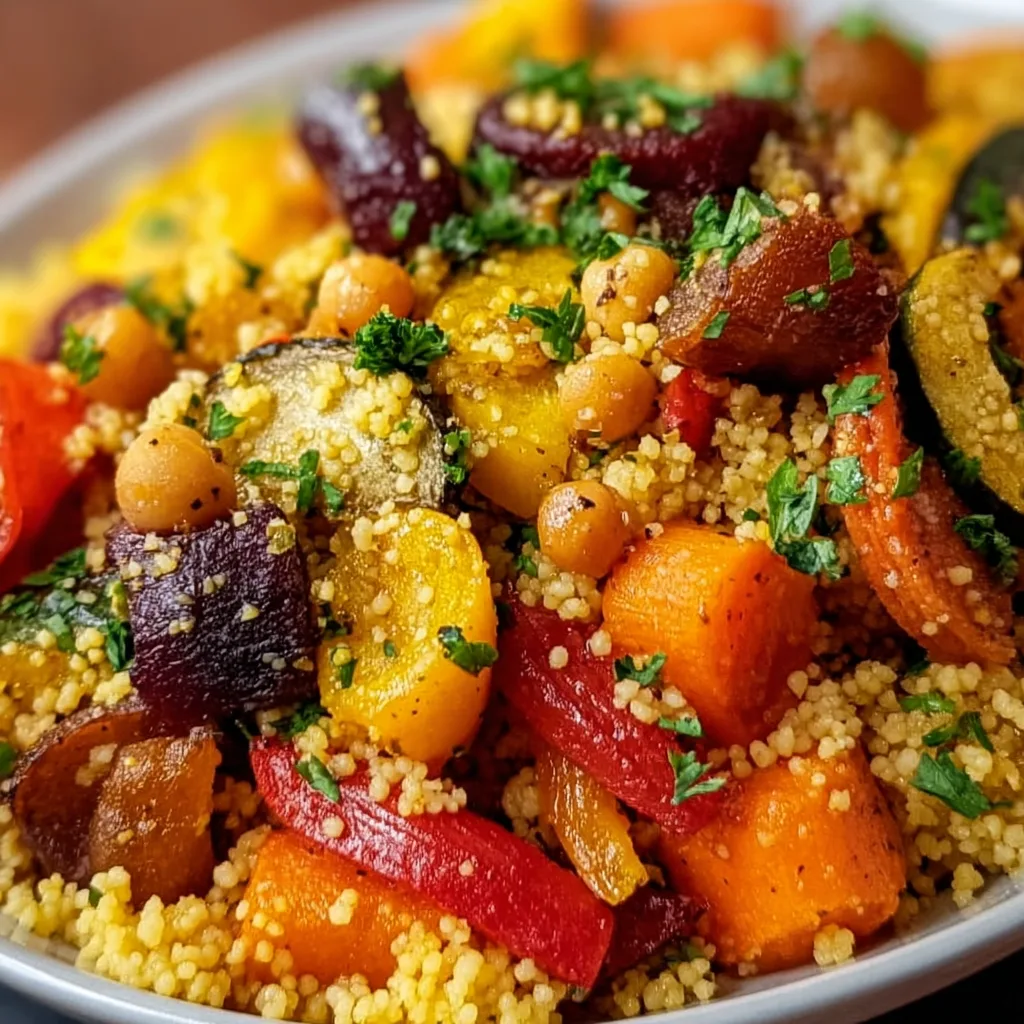
Moroccan Couscous with Roast Vegetables is a dish that transports me back to my first visit to Marrakech, where the fragrant spices and colorful market stalls awakened all my senses. This vibrant, nourishing bowl combines fluffy couscous with caramelized roasted vegetables and warm spices that dance on your tongue. The beauty of this dish lies in its perfect balance of simplicity and exotic flavors. It's become my go-to recipe when I want to bring a touch of North African sunshine to my dinner table, especially on chilly evenings when I need something both comforting and nutritionally rich.
Why You'll Love This Moroccan Couscous with Roast Vegetables
A Feast for All Senses
The moment you start preparing this dish, your kitchen transforms into a sensory paradise. The aromatic spices – cumin, coriander, and cinnamon – release their warmth as they toast, while the vegetables caramelize in the oven, creating an irresistible sweetness. What I adore most is how the colors pop on your plate – the deep orange of carrots, ruby-red bell peppers, and purple eggplant create a feast for your eyes before you even take a bite. The contrasting textures – tender vegetables against fluffy couscous – make each forkful a delightful experience.
Quick, Nutritious, and Versatile
One of the reasons I make Moroccan Couscous with Roast Vegetables so often is its incredible time-to-reward ratio. The couscous itself takes just 5 minutes to prepare, while the vegetables roast to perfection. It's packed with fiber, vitamins, and plant-based goodness that keeps you satisfied for hours. I love how adaptable it is – perfect as a standalone vegetarian main, a hearty side dish, or a base for grilled chicken or fish. Whether you're cooking for a weeknight dinner or impressing weekend guests, this dish delivers maximum flavor with minimal effort.
Essential Tips & Tricks
Mastering the Perfect Couscous
The secret to cloud-like couscous is all in the technique. I learned from a Moroccan chef to use a 1:1 ratio of couscous to hot liquid – not boiling, but just hot enough to steam. Add a tablespoon of olive oil and a pinch of salt to the liquid before pouring it over the couscous. Then, the magic happens: cover it immediately and let it sit untouched for exactly 5 minutes. When you fluff it with a fork, each grain should be separate and tender. For an authentic touch, add a cinnamon stick to the steaming liquid – it infuses a subtle warmth that elevates the entire dish.
Roasting Vegetables to Caramelized Perfection
The key to transforming ordinary vegetables into caramelized gems is proper spacing on your baking sheet. I used to crowd my pan until I discovered that giving each piece room to breathe makes all the difference. Toss your vegetables with olive oil, salt, and Moroccan spices before arranging them in a single layer. Roast at 425°F (220°C) for that perfect char without burning. My favorite trick is to add a drizzle of honey during the last 5 minutes of roasting – it creates a beautiful glaze and enhances the natural sweetness. Just like in my Mango Chicken Curry, balancing sweet and savory creates magic.
Serving Ideas & Creative Variations
Mediterranean-Inspired Additions
Elevate your Moroccan Couscous with Roast Vegetables by incorporating Mediterranean elements that complement the North African flavors. I love adding crumbled feta cheese that melts slightly into the warm couscous, creating pockets of creamy saltiness. A handful of toasted pine nuts or sliced almonds brings essential crunch, while chopped fresh herbs like mint, parsley, and cilantro brighten everything. For a protein boost, chickpeas roasted alongside the vegetables add hearty texture. Sometimes I'll serve it with a dollop of cool yogurt mixed with a touch of harissa paste for a temperature and flavor contrast that makes each bite exciting.
Seasonal Adaptations
One of the joys of this recipe is how beautifully it transitions through seasons. In summer, I swap in zucchini, yellow squash, and cherry tomatoes that burst in the oven. Fall brings sweet potatoes, Brussels sprouts, and cauliflower that develop nutty notes when roasted. Winter calls for heartier additions like butternut squash and parsnips with warming spices. Spring inspires lighter versions with asparagus, snap peas, and leeks. The Roast Vegetables to Perfection technique works for any seasonal produce, making this dish a year-round staple that never feels repetitive.
Storage & Troubleshooting Guide
Keeping It Fresh
Moroccan Couscous with Roast Vegetables makes excellent leftovers when stored properly. I recommend keeping the couscous and vegetables in separate airtight containers in the refrigerator for up to 3 days. This prevents the couscous from absorbing too much moisture from the vegetables and becoming soggy. To reheat, sprinkle a little water over the couscous before microwaving it gently, then add the vegetables during the last 30 seconds. For meal prep, you can freeze portions in individual containers for up to 2 months – just thaw overnight in the refrigerator and reheat with a splash of broth to revive the flavors.
Fixing Common Mistakes
If your couscous turns out clumpy or gummy, it's likely because the liquid was too hot or you stirred it while steaming. The fix is simple: spread it on a baking sheet, separate the grains with a fork, and warm it in a low oven for 5 minutes. For vegetables that turned out soggy instead of caramelized, your oven temperature was probably too low or the pan was overcrowded. Next time, increase the heat and use two pans if needed. If your dish lacks flavor, brighten it with fresh lemon juice, a drizzle of good olive oil, or a sprinkle of za'atar just before serving.
Frequently Asked Questions
Can I make Moroccan Couscous with Roast Vegetables ahead of time?
Yes! Prepare the components separately up to 2 days ahead. Store in airtight containers in the refrigerator and combine just before serving, adding fresh herbs and a drizzle of olive oil to refresh.
What's the best substitute for couscous if I'm gluten-free?
Quinoa makes an excellent gluten-free alternative with a similar texture. Cook according to package directions, then fluff and season just as you would couscous.
How can I add protein to this dish?
Add chickpeas to roast with the vegetables, or top with grilled chicken, salmon, or halloumi cheese. For plant-based options, try crispy tofu or a sprinkle of hemp seeds.
What spices are essential for authentic Moroccan flavor?
Cumin, coriander, cinnamon, and paprika form the foundation. For depth, add a pinch of turmeric, ginger, and cayenne. A touch of rose harissa paste adds wonderful complexity.
Can I use instant couscous for this Moroccan Couscous with Roast Vegetables recipe?
Absolutely! Instant couscous works perfectly. Just adjust the liquid ratio and steaming time according to the package instructions, typically using slightly less water.
Final Thoughts
Creating Moroccan Couscous with Roast Vegetables in my kitchen always feels like a small act of celebration. There's something deeply satisfying about transforming simple ingredients into a dish so vibrant and nourishing. I hope this recipe inspires you to play with spices and embrace the joy of roasting vegetables to their sweet, caramelized potential. Whether you serve it as a colorful side or a hearty main, this dish brings a touch of North African sunshine to any table. For more inspiration, check out my Pinterest board filled with global flavors and colorful vegetable dishes.