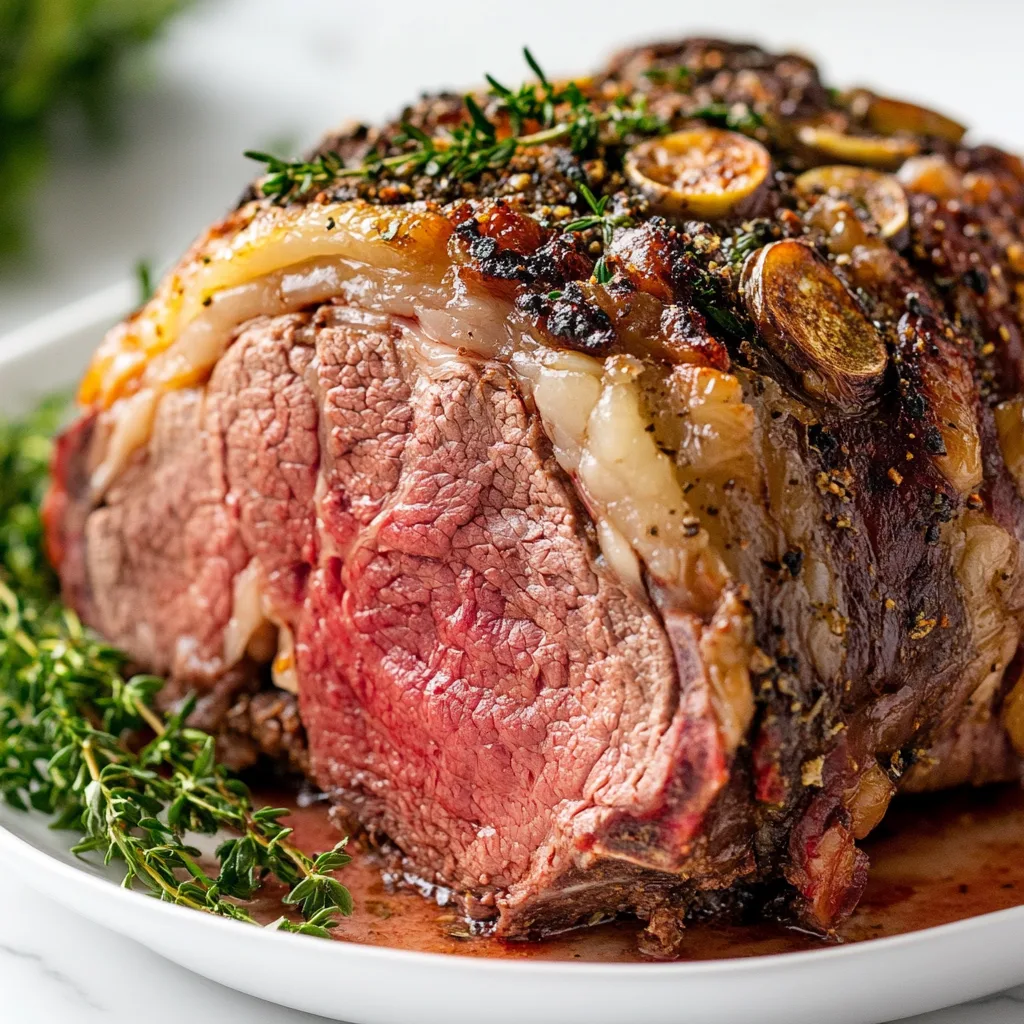
Easy Slow-Roasted Prime Rib has transformed my holiday gatherings from stressful cooking marathons into relaxed celebrations filled with mouthwatering aromas. The first time I attempted this showstopper, I was terrified of ruining an expensive cut of meat. But that slow, gentle heat worked its magic, producing the most tender, juicy roast I’d ever tasted. Now it’s my go-to whenever I want to impress without the stress—like my crustless quiche, it’s deceptively simple but absolutely magnificent. Let me show you how this elegant centerpiece can become your new tradition too.
Table of Contents
Recipe
Print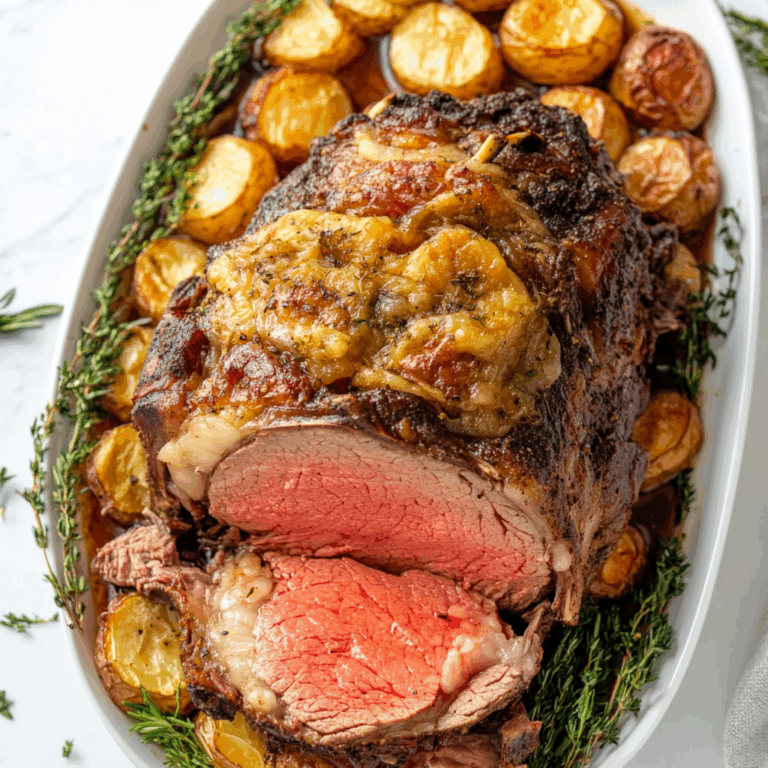
Easy Slow-Roasted Prime Rib Recipe | Tender & Juicy Roast Beef Made Simple
This Easy Slow-Roasted Prime Rib recipe gives you a tender, juicy roast every time with minimal effort. The low-and-slow method ensures a perfect rosy interior and a crisp, flavorful crust—no guesswork needed.
- Total Time: 4 hours 15 minutes
- Yield: 6 servings 1x
Ingredients
1 (4–6 lb) bone-in or boneless prime rib roast
2 tbsp olive oil
2 tbsp kosher salt
1 tbsp freshly ground black pepper
1 tbsp garlic powder
1 tbsp onion powder
1 tsp dried rosemary (or 1 tbsp fresh, chopped)
1 tsp dried thyme (or 1 tbsp fresh, chopped)
Optional: horseradish cream or au jus for serving
Instructions
1. Remove prime rib from fridge 2 hours before roasting to come to room temperature.
2. Preheat oven to 200°F (95°C). Pat the roast dry with paper towels.
3. Mix salt, pepper, garlic powder, onion powder, rosemary, and thyme in a bowl.
4. Rub olive oil over roast, then coat evenly with the seasoning blend.
5. Place roast on a wire rack in a roasting pan, fat-side up.
6. Roast uncovered for 3–4 hours, or until internal temperature reaches 120°F for rare or 130°F for medium-rare.
7. Remove roast and let rest 30–45 minutes (it will continue cooking).
8. Just before serving, increase oven to 500°F. Roast for 10–15 minutes to crisp the exterior.
9. Slice and serve with au jus or creamy horseradish sauce.
Notes
Use a meat thermometer to avoid overcooking.
Letting the roast rest is key for juicy slices.
Perfect for holiday meals, dinner parties, or Sunday roasts.
- Prep Time: 15 minutes
- Cook Time: 4 hours
- Category: Dinner, Roast Beef, Holiday
- Method: Slow Roasting
- Cuisine: American
Nutrition
- Serving Size: 1 thick slice
- Calories: 590
- Sugar: 0g
- Sodium: 520mg
- Fat: 46g
- Saturated Fat: 20g
- Unsaturated Fat: 22g
- Trans Fat: 0g
- Carbohydrates: 1g
- Fiber: 0g
- Protein: 40g
- Cholesterol: 135mg
Keywords: slow-roasted prime rib, easy prime rib recipe, tender juicy roast beef
Why You’ll Love This Easy Slow-Roasted Prime Rib
Perfect for Special Occasions
There’s something almost magical about presenting a perfectly cooked prime rib at your table. The rich, beefy aroma fills the house with anticipation while you’re free to mingle with guests instead of fussing over the stove. I remember serving this last Christmas—my father-in-law, who rarely comments on food, actually stood up to applaud. The slow-roasting method creates a beautiful crust while keeping the interior tender and juicy. Even better, the hands-off cooking approach means you can focus on sides, desserts, or simply enjoying your company.
Foolproof Method for Beginners
Don’t let the fancy reputation intimidate you—this recipe is actually beginner-friendly. The slow-roasting technique provides a generous margin of error compared to higher-heat methods. Last year, my timer malfunctioned and I accidentally left the roast in for an extra 20 minutes, yet it still emerged perfectly medium-rare! The gentle heat distributes so evenly that you’ll achieve that restaurant-quality gradient from edge to center. I’ve coached several friends through their first prime rib attempts, and they’ve all been amazed at how simple the process actually is.
Essential Tips & Tricks
Selecting and Preparing Your Roast
Choosing the right cut makes all the difference. Look for a well-marbled roast with bright red color and a nice fat cap—this natural basting system keeps everything juicy. Ask your butcher for a bone-in “standing rib roast” from the middle section (ribs 6-9) for the best flavor balance. Let your meat come to room temperature for at least 2 hours before roasting—this step is non-negotiable for even cooking! I like to prepare my seasoning mix while waiting, keeping things simple with just kosher salt, fresh cracked pepper, and fresh herbs. This pairs wonderfully with slow cooker candied pecans as a pre-dinner nibble.
Temperature Control Secrets
The low-and-slow approach is what transforms this recipe from good to extraordinary. Invest in a reliable meat thermometer—preferably one with a probe you can leave in during cooking. I set my oven to 225°F (107°C) and roast until the internal temperature reaches 125°F (52°C) for medium-rare. Remember that carryover cooking will raise the temperature another 5-10 degrees while resting. My secret weapon? A 15-minute rest followed by a quick 5-minute blast in a 500°F (260°C) oven just before serving. This creates that perfect exterior crust while maintaining the rosy interior.
Serving Ideas & Creative Variations
Classic Accompaniments
The beauty of prime rib lies in its ability to complement various sides while remaining the star. I love serving mine with creamy horseradish sauce and rich au jus made from the drippings—these traditional pairings enhance without overwhelming. For sides, crispy roasted potatoes absorb the flavorful juices beautifully, while a bright green vegetable like asparagus or Brussels sprouts adds color and balance. Last New Year’s Eve, I paired my prime rib with an apple cranberry crisp for dessert, and the sweet-tart flavors created the perfect finale to a memorable meal.
Global Flavor Profiles
While traditional seasonings are wonderful, experimenting with international flavor profiles can create exciting variations. Try a Mediterranean version with rosemary, garlic, and lemon zest, or go bold with a coffee and chili rub for smoky depth. One of my favorite variations uses a miso and ginger paste that caramelizes beautifully during the final high-heat blast. The umami notes complement the beef’s natural richness perfectly. Remember that prime rib’s neutral canvas welcomes creative seasoning, but the meat’s quality should always shine through.
Storage & Troubleshooting Guide
Proper Storage Methods
Leftover prime rib is a luxury worth preserving properly. Refrigerate within two hours of cooking, storing slices in shallow airtight containers with some of the juices to maintain moisture. They’ll keep for 3-4 days this way. For longer storage, wrap slices tightly in freezer paper, then aluminum foil, and freeze for up to 3 months. I like to portion leftovers for quick weekday meals—thinly sliced cold prime rib makes an incredible sandwich on crusty bread with horseradish cream. For reheating, gentle methods work best to preserve that perfect doneness.
Common Problems & Solutions
Even experienced cooks encounter challenges. If your roast develops a gray band instead of an even pink interior, your oven temperature was likely too high. Next time, reduce by 25°F and use a thermometer to verify your oven’s accuracy. For a roast that’s overdone, slice it thinner and serve with extra au jus to compensate. If the exterior lacks that coveted crust, ensure you’re patting the meat completely dry before seasoning and consider extending the high-heat finishing step by a minute or two. Remember that patience is crucial—rushing any step compromises results.
Frequently Asked Questions
How long does it take to slow-roast a prime rib?
Plan for about 35 minutes per pound at 225°F for medium-rare. A 5-pound roast takes approximately 3 hours, but always use a meat thermometer rather than timing alone.
Should I cover my Easy Slow-Roasted Prime Rib while cooking?
No, leave it uncovered. This allows the exterior to develop flavor while the low temperature prevents it from drying out.
Can I prepare the roast the day before cooking?
Absolutely! Season your roast up to 24 hours ahead and refrigerate uncovered. This dry-brines the meat and develops deeper flavor.
What’s the best way to reheat leftover prime rib?
Wrap in foil and heat at 250°F until just warm (about 10 minutes). Alternatively, slice thinly and briefly dip in hot au jus.
How do I know when my prime rib is done?
Use a meat thermometer: 125°F for medium-rare, 135°F for medium. Remember the temperature will rise 5-10 degrees during resting.
Final Thoughts
This Easy Slow-Roasted Prime Rib has become my signature dish for a reason—it delivers restaurant-quality results with remarkable simplicity. The combination of gentle cooking and quality ingredients creates something truly special that brings people together around the table. I hope you’ll try this method and discover the joy of creating something extraordinary with minimal effort. For more inspiration, check out my Pinterest boards where I share seasonal menu ideas and pairings for special occasions.