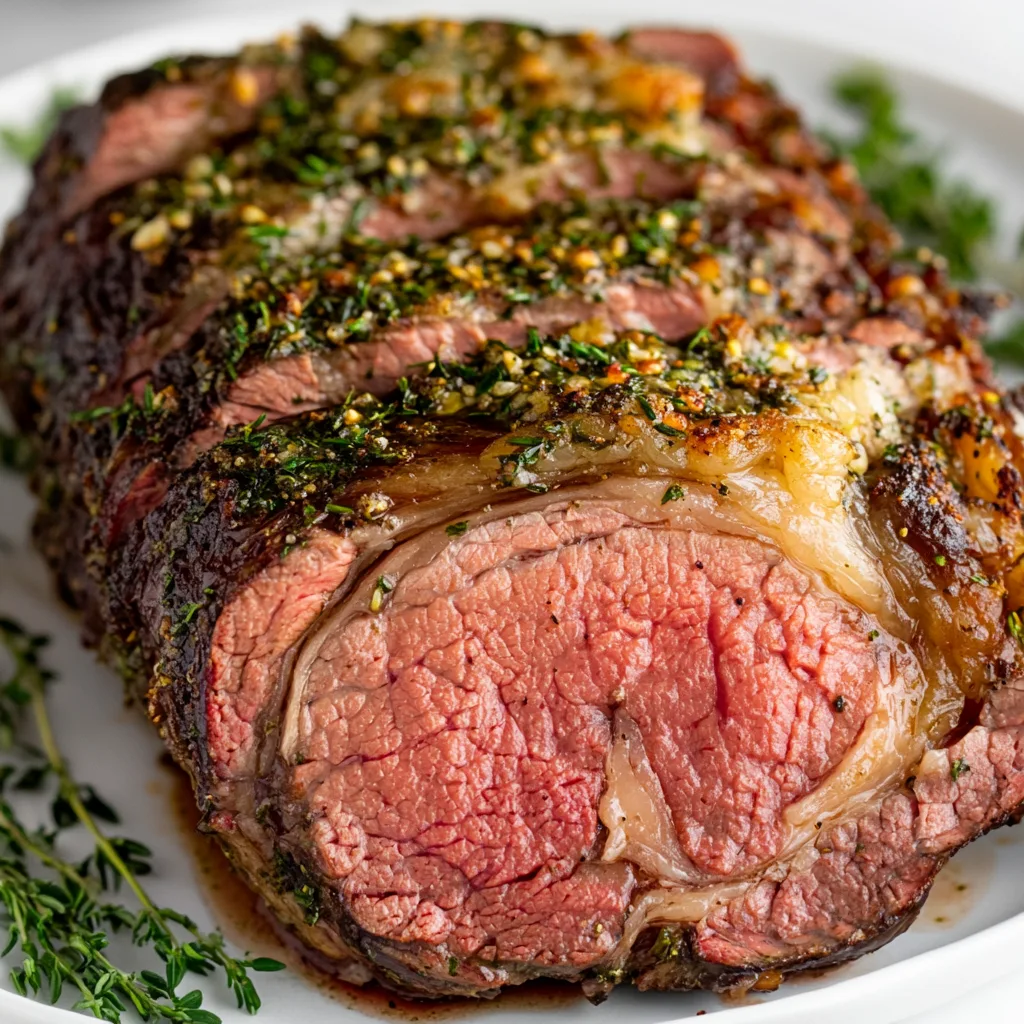
Garlic Herb Butter Prime Rib has become my holiday table’s crown jewel, transforming ordinary family gatherings into memorable feasts. The first time I prepared this showstopper, the kitchen filled with an intoxicating aroma that drew everyone in before dinner was even announced. There’s something magical about that moment when you slice into a perfectly roasted prime rib, revealing that blushing pink center while fragrant herb butter melts into every crevice. It’s indulgent without being fussy, impressive without being intimidating. If you’re looking to elevate your next special occasion, this crustless quiche might be your everyday go-to, but this prime rib recipe deserves its moment in the spotlight.
Table of Contents
Recipe
Print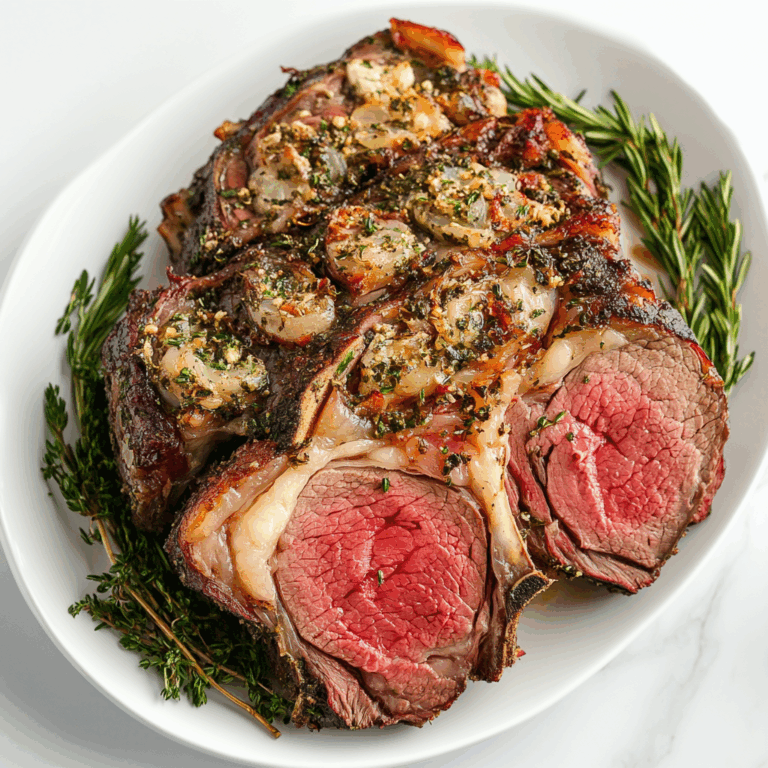
Garlic Herb Butter Prime Rib Recipe | Juicy & Flavorful Prime Rib Steak
This garlic herb butter prime rib is incredibly juicy, tender, and packed with rich beef flavor. A savory blend of butter, garlic, and fresh herbs creates a golden crust on the outside while the inside stays perfectly pink—ideal for carving thick prime rib steak-style slices for holidays or special dinners.
- Total Time: 2 hours 30 minutes
- Yield: 6 servings 1x
Ingredients
1 (4–5 pound) bone-in prime rib roast
1/2 cup unsalted butter, softened
4 cloves garlic, minced
2 tablespoons fresh rosemary, finely chopped
1 tablespoon fresh thyme, finely chopped
1 teaspoon dried oregano
1 teaspoon garlic powder
1 teaspoon onion powder
2 teaspoons kosher salt
1 teaspoon black pepper
Optional: 1 cup beef broth or red wine for jus
Instructions
1. Remove the prime rib from the refrigerator 1–2 hours before cooking to come closer to room temperature.
2. Preheat the oven to 450°F (230°C).
3. In a bowl, mix softened butter, minced garlic, rosemary, thyme, oregano, garlic powder, onion powder, salt, and pepper until well combined.
4. Pat the roast dry with paper towels.
5. Rub the garlic herb butter mixture all over the roast, coating the top, sides, and around the bones.
6. Place the roast bone-side down in a roasting pan on a rack.
7. Roast at 450°F for 15–20 minutes to develop a deep golden crust.
8. Reduce oven temperature to 325°F (165°C) and continue roasting for 1 1/2–2 hours, or until the internal temperature reaches 120–125°F (49–52°C) for medium-rare.
9. Remove from the oven, tent loosely with foil, and rest for 20–30 minutes so the juices redistribute.
10. Slice along the bones to remove them, then carve into thick prime rib steak-style slices and serve.
11. Optional: Place the roasting pan over medium heat, add beef broth or wine, and simmer while scraping up browned bits to make a simple jus.
Notes
Always use a meat thermometer for perfectly cooked prime rib.
Resting time is essential for super-juicy, tender slices.
Finish individual steak-style slices in a hot skillet or under the broiler for extra crust if desired.
- Prep Time: 15 minutes
- Cook Time: 2 hours
- Category: Dinner
- Method: Roasted
- Cuisine: American
Nutrition
- Serving Size: 1 slice
- Calories: 540
- Sugar: 0g
- Sodium: 500mg
- Fat: 44g
- Saturated Fat: 21g
- Unsaturated Fat: 23g
- Trans Fat: 0g
- Carbohydrates: 1g
- Fiber: 0g
- Protein: 34g
- Cholesterol: 145mg
Keywords: garlic herb butter prime rib, prime rib steak, juicy holiday roast, flavorful roast beef, prime rib recipe
Why You’ll Love This Garlic Herb Butter Prime Rib
Restaurant-Quality Results at Home
This recipe transforms your kitchen into a five-star steakhouse without the hefty price tag. The compound butter creates a self-basting effect that keeps the meat incredibly juicy while infusing it with flavor from the inside out. I still remember my brother-in-law’s face when he took his first bite last Christmas—pure disbelief that something this good came from my oven rather than a professional kitchen. The reverse-sear method ensures a consistent medium-rare throughout with that coveted caramelized crust. Even if you’ve never tackled a prime rib before, this foolproof approach delivers impressive results every single time.
Perfect for Special Occasions
There’s nothing quite like bringing this magnificent roast to the table and watching everyone’s eyes widen with anticipation. The presentation alone makes it worth the effort—a golden-brown exterior giving way to that gorgeous pink center. Last anniversary, I surprised my husband with this instead of going out, and the intimate dinner became more special than any restaurant experience. The beauty of prime rib is that most of the cooking time is hands-off, allowing you to prepare sides and set a beautiful table while it roasts. The garlic-herb aroma filling your home creates an atmosphere of celebration before anyone takes a single bite.
Essential Tips & Tricks
Selecting and Preparing Your Prime Rib
Start with quality meat—look for a well-marbled roast with the bone attached for maximum flavor. I prefer asking my butcher for a cut from the chuck end (ribs 6-9) for the perfect balance of tenderness and flavor. Always bring your prime rib to room temperature before cooking; this 2-hour rest ensures even cooking from edge to center. Pat the roast completely dry with paper towels before applying your herb butter—moisture is the enemy of a good crust! Remember to generously season with salt 24 hours before cooking if possible, allowing it to act as a dry brine that penetrates deep into the meat, similar to how I prepare my sausage breakfast casserole for maximum flavor.
Mastering the Cooking Method
The reverse-sear technique is non-negotiable for prime rib perfection. Start with a low oven temperature (200-225°F) and cook until the internal temperature reaches 120-125°F for medium-rare. This slow approach allows the heat to penetrate evenly without overcooking the exterior. Use a reliable meat thermometer—this isn’t the time for guesswork! After the initial roast, remove the prime rib and let it rest while increasing your oven temperature to 500°F. The final high-heat blast for 5-10 minutes creates that mouthwatering crust without cooking the interior further. I learned this method after three holiday disasters, and it’s been foolproof ever since.
Serving Ideas & Creative Variations
Classic Accompaniments
Nothing complements the rich flavor of prime rib like traditional sides that balance its decadence. Creamy horseradish sauce provides that perfect sharp contrast that cuts through the richness of the meat—I make mine with sour cream, prepared horseradish, Dijon, and a splash of lemon juice. Yorkshire puddings baked in the meat drippings are non-negotiable in my house, creating perfect vessels for catching extra au jus. For vegetables, I love serving roasted garlic mashed potatoes and bright green vegetables like asparagus or Brussels sprouts. The colorful presentation reminds me of holiday tables from childhood, though far more sophisticated than the apple cranberry crisp that was our only “fancy” dish back then.
Exciting Flavor Variations
While the classic garlic-herb butter is divine, don’t be afraid to experiment with bold flavor profiles. A blue cheese compound butter creates an incredible crust with tangy depth—simply mix room-temperature butter with crumbled blue cheese, fresh thyme, and black pepper. For something unexpected, try a coffee-peppercorn rub that creates a stunning bark-like exterior. The coffee doesn’t make it taste like breakfast; rather, it enhances the meat’s natural savoriness. My personal favorite variation includes rosemary, orange zest, and a touch of bourbon in the butter—the citrus brightens while the bourbon adds caramel notes that caramelize beautifully during the final sear.
Storage & Troubleshooting Guide
Proper Storage and Reheating
Leftover prime rib is a luxury that deserves proper treatment. Store slices in an airtight container with a small amount of au jus to maintain moisture, and refrigerate for up to 4 days. Never reheat in the microwave—this premium cut deserves better! Instead, bring slices to room temperature, then warm them gently in a 250°F oven until they reach 120°F internally. For an even better method, place vacuum-sealed leftovers in a water bath at 130°F for 20 minutes. Leftover prime rib makes incredible sandwiches on crusty bread with horseradish cream, arugula, and thinly sliced red onion—sometimes I look forward to these more than the initial meal!
Solving Common Problems
If your prime rib develops a gray band between the crust and the pink center, your oven temperature was likely too high during the initial roast. Next time, lower the temperature and extend the cooking time. For a roast that’s too rare in the center, you can always return individual slices to a hot skillet for a quick sear on each side—this preserves the beautiful crust while bringing the interior to your desired doneness. If your herb butter won’t stick to the roast, ensure the butter is soft but not melted and the meat is completely dry. I once had to improvise by chilling the buttered roast for 15 minutes before roasting, which worked beautifully.
Frequently Asked Questions
What size prime rib should I buy for my gathering?
Plan for ¾ to 1 pound per person with the bone in, or ½ pound per person boneless. This accounts for shrinkage and ensures everyone gets their fill with maybe some coveted leftovers.
Can I make the Garlic Herb Butter Prime Rib ahead of time?
You can prepare the compound butter up to 3 days ahead and apply it to the roast 24 hours before cooking. The dry brine actually improves flavor development!
What’s the best way to carve a prime rib?
Remove the bones first by sliding a sharp knife along the bone line. Then place the roast flat-side down and cut perpendicular to the cutting board in even slices.
How can I tell when my prime rib is done without a thermometer?
While a thermometer is strongly recommended, the finger test works in a pinch. The meat should feel like the base of your thumb when touching your middle finger to your thumb.
Why is my Garlic Herb Butter Prime Rib tough?
Toughness usually indicates overcooking. Aim for 120-125°F internal temperature during the initial roast, as it will continue cooking during resting and the final sear.
Final Thoughts
This Garlic Herb Butter Prime Rib has transformed countless special occasions in my home, from holiday celebrations to milestone anniversaries. There’s something profoundly satisfying about mastering this classic centerpiece—it builds confidence in the kitchen while creating lasting memories around the table. The perfect prime rib isn’t just about technique; it’s about the anticipation, the moment of reveal, and the shared experience of something truly exceptional. Find more inspiration for your special occasions on my Pinterest board where I’m always adding new ideas!