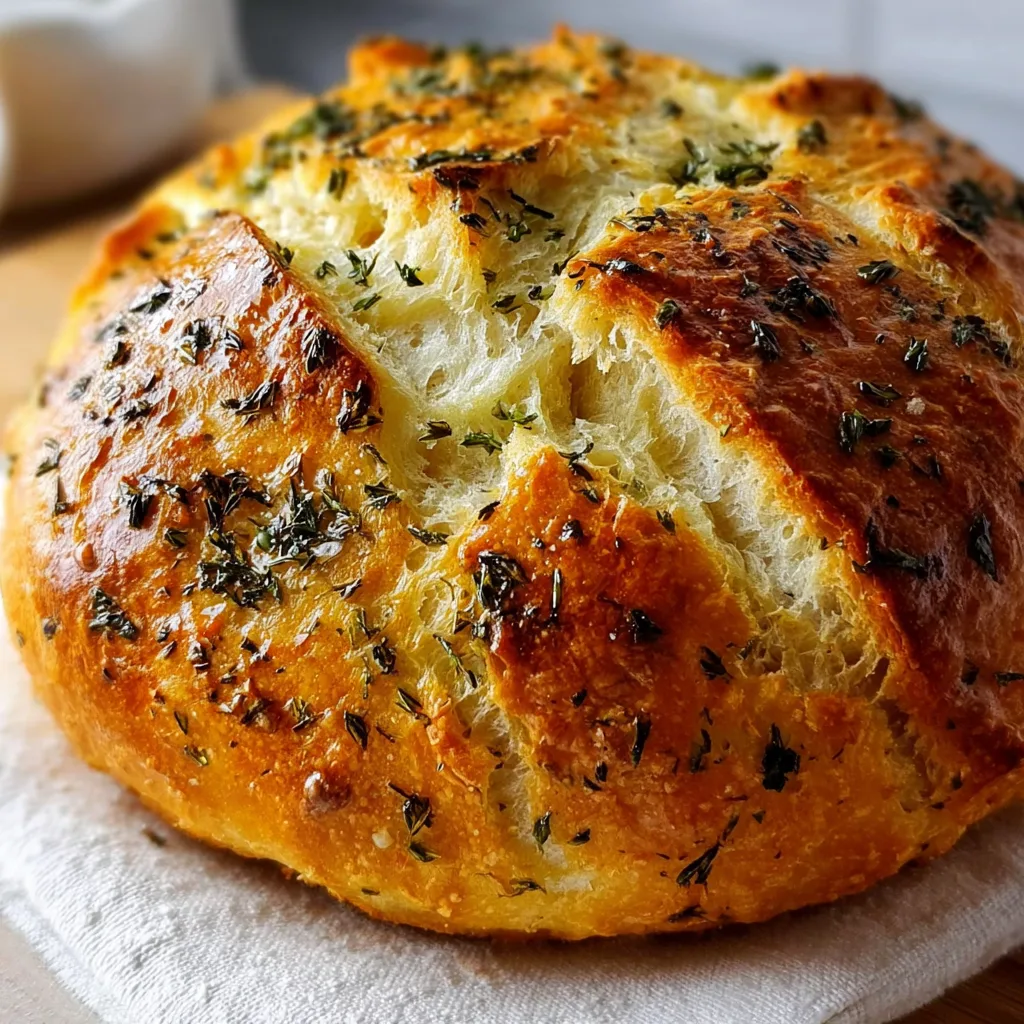
Garlic Herb Dutch Oven Bread transforms your kitchen into a European bakery with minimal effort. The first time I pulled this golden, aromatic loaf from my oven, the intoxicating blend of garlic, herbs, and yeast transported me straight to a little café in Provence. There's something magical about the crackling crust giving way to a pillowy interior studded with fragrant herbs. This no-knead bread recipe delivers professional results with just minutes of hands-on time – perfect for both novice bakers and seasoned bread enthusiasts alike. Like my Orleans Bread Pudding with Bourbon Sauce, it's a simple recipe that yields impressive results.
Why You'll Love This Garlic Herb Dutch Oven Bread
Effortless Technique with Professional Results
This bread requires no kneading whatsoever, yet produces bakery-quality results. The magic happens during the long, slow fermentation process, where time does all the work developing gluten and complex flavors. I remember the first time I tried this method – I was genuinely shocked that something so simple could create such an impressive loaf. The dutch oven creates a mini steam oven environment, trapping moisture to form that coveted crackling crust that makes artisan bread so special. Even on busy weeknights, you can enjoy fresh, warm bread with dinner.
Customizable Herb Combinations
The beauty of this recipe lies in its adaptability to whatever herbs you have on hand. My personal favorite combination is rosemary, thyme and sage with plenty of garlic, but you can easily swap in oregano, basil, or dill depending on what's in your garden or pantry. Each herb imparts its unique character to the bread. Last summer, I used fresh herbs from my tiny balcony garden, and the bread had this incredible brightness that dried herbs simply can't match. The garlic adds a savory depth that makes this bread irresistible for dipping into soups or slathering with butter.
Essential Tips & Tricks
Mastering the Dutch Oven Method
The key to that perfect artisan crust is a preheated dutch oven. This creates the steam environment crucial for developing a crackling exterior. I learned this the hard way after skipping the preheat once – the bread was good, but lacked that distinctive crust. For safety, always use heavy-duty oven mitts when handling the scorching hot dutch oven. Another game-changer is letting the dough have its final rise on parchment paper, which makes transferring to the hot pot effortless. This prevents deflating your carefully risen dough and preserves those beautiful air pockets that create the perfect texture in your Garlic Herb Dutch Oven Bread.
Flour Selection and Measurements
Using the right flour makes all the difference in bread baking. Bread flour delivers superior structure and chew due to its higher protein content, but all-purpose flour works beautifully too. For the most accurate results, measure flour by weight rather than volume – I was amazed at how much my bread improved when I started using a kitchen scale. If your dough seems too sticky during the initial mix, resist adding much extra flour. A slightly wetter dough creates those gorgeous irregular holes in the finished bread. Just dust your hands with flour when shaping to prevent sticking.
Serving Ideas & Creative Variations
Perfect Pairings for Every Occasion
This versatile bread elevates virtually any meal from ordinary to memorable. Serve thick, warm slices alongside hearty soups like minestrone or beef stew for a comforting dinner. For entertaining, I love cutting it into cubes for dipping in olive oil infused with fresh herbs and cracked pepper. It makes an incredible base for bruschetta or crostini topped with tomatoes and basil. The robust flavor also stands up beautifully to strong cheeses – try it with a Creamy Tuscan Marry Me Butter Beans spread for an unforgettable appetizer that always disappears first at gatherings.
Flavor Variations Beyond Herbs
While the classic garlic and herb combination is divine, don't be afraid to experiment with bold additions. Fold in grated Parmesan or Asiago cheese for a savory depth that's absolutely irresistible. Sun-dried tomatoes and olives create a Mediterranean-inspired loaf perfect for serving with pasta. For a touch of heat, add crushed red pepper flakes or finely chopped jalapeños. My family went crazy for a version with caramelized onions and roasted garlic that made the house smell like heaven. For a sweeter variation, try rosemary with orange zest – the unexpected pairing creates a bread that's wonderful with breakfast or alongside a cheese board.
Storage & Troubleshooting Guide
Keeping Your Bread Fresh
To maintain that perfect texture, store your Garlic Herb Dutch Oven Bread properly. For short-term storage (1-2 days), wrap the cooled loaf in a clean kitchen towel and keep at room temperature. This preserves the crust better than plastic bags, which tend to soften it. For longer storage, slice the entire loaf once completely cooled and freeze in a ziplock bag with the air pressed out. When ready to enjoy, toast frozen slices directly from the freezer – they'll taste nearly as fresh as day one. I always make two loaves now, keeping one in the freezer for impromptu dinner parties or lazy weekend breakfasts.
Solving Common Bread Issues
If your bread turns out denser than expected, the most likely culprit is insufficient proofing time. Yeast needs adequate time to create those air pockets, especially in cooler kitchens. Next time, try extending the final rise by 30 minutes or until the dough passes the poke test – when gently poked, it should slowly spring back but leave a slight indentation. For a pale crust, your dutch oven may not be hot enough; ensure it preheats for at least 30 minutes. If the bottom burns before the bread is done, place a baking sheet on the rack below to diffuse the heat.
Frequently Asked Questions
Can I make Garlic Herb Dutch Oven Bread ahead of time?
Absolutely! Prepare the dough up to 3 days ahead and refrigerate it. The slow, cold fermentation actually enhances flavor. Just bring to room temperature before the final shaping and rise.
What's the best dutch oven size for this bread?
A 5-6 quart dutch oven is ideal. Smaller pots constrain the bread's rise, while larger ones allow it to spread too much, resulting in a flatter loaf.
Can I use fresh herbs instead of dried?
Yes! Use 3 times the amount of fresh herbs compared to dried. Chop them finely and consider adding some dried herbs too for concentrated flavor.
Why did my bread not rise properly?
Check your yeast's freshness, water temperature (too hot kills yeast), and ensure adequate proofing time. Cold kitchens require longer rising periods.
Is parchment paper necessary for baking Garlic Herb Dutch Oven Bread?
While not absolutely required, parchment prevents sticking and makes transferring the dough to the hot dutch oven much easier and safer.
Final Thoughts
This Garlic Herb Dutch Oven Bread has become my signature recipe – the one friends and family request most often. There's something profoundly satisfying about creating such a beautiful, aromatic loaf with so little effort. The contrast between the crackling crust and tender, herb-flecked interior makes each slice a small celebration. Whether you're a novice baker or seasoned bread enthusiast, this recipe delivers consistent, impressive results that will have everyone thinking you've been secretly training with French bakers. Find more inspiration for your baking adventures on Pinterest.