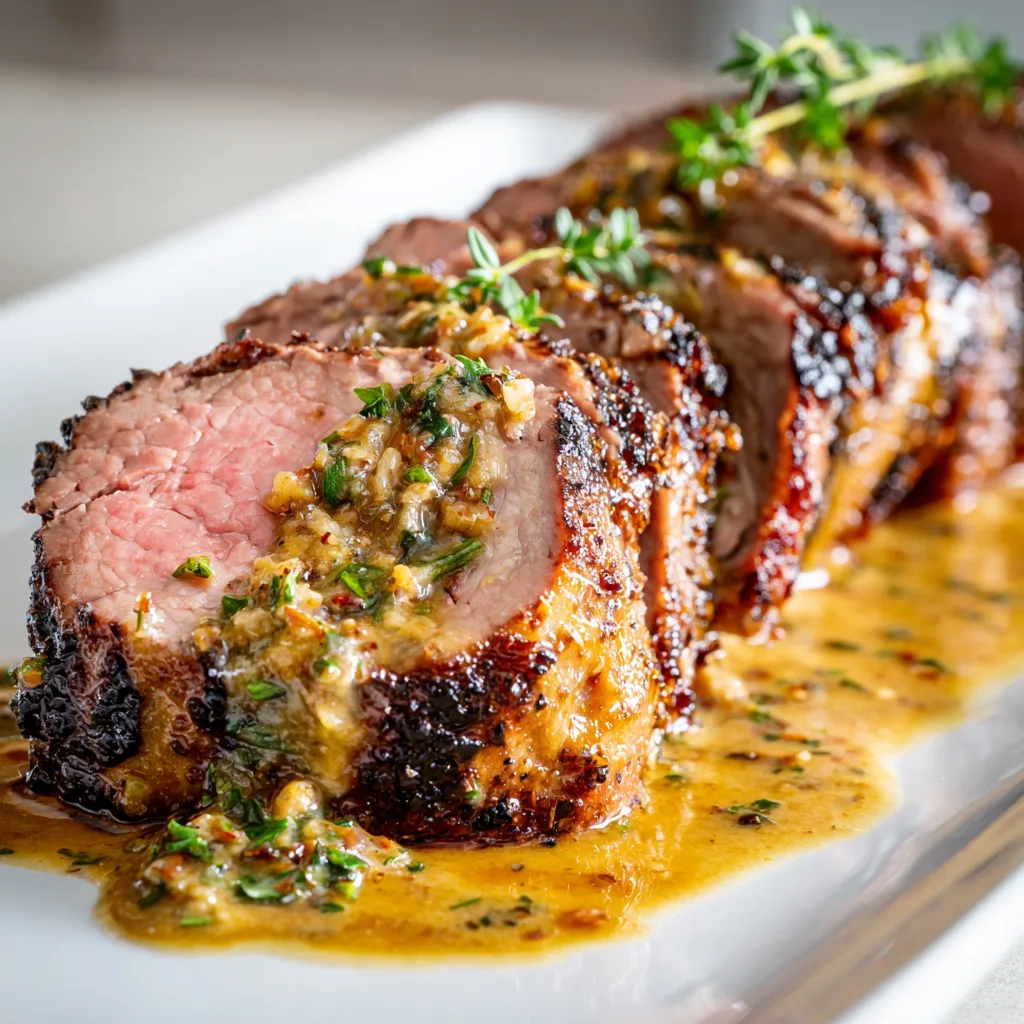
This maple mustard beef tenderloin transforms an ordinary dinner into a celebration. The first time I made this recipe, the aroma filled my kitchen with sweet, tangy notes that made my mouth water before I even took the first bite. There’s something magical about how the sticky maple glaze caramelizes around the perfectly pink center of a tenderloin. The balance of sweet maple syrup against the sharp bite of whole-grain mustard creates a flavor profile that’s both sophisticated and comforting. I’ve served this at everything from casual family gatherings to elegant dinner parties, and it never fails to impress even my most food-particular friends. It’s become my go-to when I need a foolproof yet impressive main dish.
Table of Contents
Recipe
Print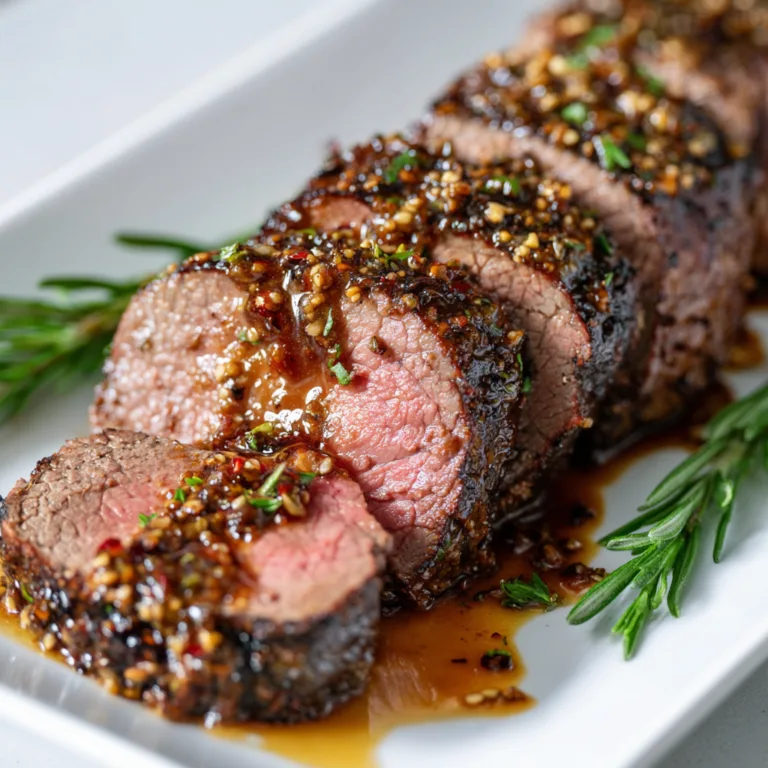
Maple Mustard Beef Tenderloin Recipe
This Maple Mustard Beef Tenderloin is a gourmet main dish that’s both elegant and simple. Tender roasted beef coated in a sweet, tangy maple-Dijon glaze makes for a flavor-packed centerpiece perfect for holidays, dinner parties, or any special occasion.
- Total Time: 40 minutes
- Yield: 6 servings 1x
Ingredients
1 whole beef tenderloin (2 to 2.5 lbs), trimmed
2 tbsp olive oil
Salt and black pepper to taste
2 tbsp Dijon mustard
1 tbsp whole grain mustard
2 tbsp pure maple syrup
2 cloves garlic, minced
1 tsp fresh rosemary, finely chopped (or 1/2 tsp dried)
Optional: fresh thyme or parsley for garnish
Instructions
1. Preheat oven to 425°F (220°C). Pat beef tenderloin dry and let come to room temperature.
2. Season beef generously with salt and pepper. Rub with olive oil.
3. In a small bowl, whisk together Dijon, whole grain mustard, maple syrup, garlic, and rosemary.
4. Place tenderloin on a foil-lined baking sheet or roasting pan. Brush half the glaze over the top.
5. Roast for 25–30 minutes or until internal temperature reaches 130°F (for medium-rare), brushing with remaining glaze halfway.
6. Remove from oven, tent with foil, and let rest for 10–15 minutes before slicing.
7. Garnish with herbs and serve with roasted vegetables or mashed potatoes.
Notes
Use a meat thermometer for perfect doneness.
Make ahead: prep glaze and season meat up to 24 hours in advance.
Pairs well with red wine, garlicky green beans, or a winter salad.
- Prep Time: 10 minutes
- Cook Time: 30 minutes
- Category: Dinner, Holiday
- Method: Roasted
- Cuisine: American
Nutrition
- Serving Size: 6 oz
- Calories: 420
- Sugar: 5g
- Sodium: 340mg
- Fat: 24g
- Saturated Fat: 9g
- Unsaturated Fat: 13g
- Trans Fat: 0g
- Carbohydrates: 6g
- Fiber: 0g
- Protein: 43g
- Cholesterol: 120mg
Keywords: maple mustard beef tenderloin, roasted beef tenderloin, gourmet holiday roast
Why You’ll Love This Maple Mustard Beef Tenderloin
Perfect Balance of Flavors
The sweet-savory harmony in this dish is what makes it truly special. The natural sweetness from pure maple syrup (please, no pancake syrup substitutes!) creates a gorgeous caramelized exterior that seals in the juices. Meanwhile, the whole grain mustard adds tiny pops of pungent flavor and a slight textural contrast that keeps each bite interesting. I love how the mustard’s sharpness cuts through the richness of the beef, creating that perfect balance that makes you want to close your eyes with each bite. The herbs add an earthy undertone that rounds everything out beautifully.
Foolproof Elegance
Despite its impressive presentation, this maple mustard beef tenderloin is surprisingly forgiving to prepare. Even when I was rushing to get dinner on the table last Christmas and slightly overshot my timer, the maple-mustard coating protected the meat from drying out. The glaze creates a protective barrier that helps maintain moisture, making this recipe more foolproof than a traditional roast. Plus, the presentation—a beautifully caramelized exterior sliced to reveal a perfect pink center—looks like you spent hours in the kitchen when it actually requires minimal hands-on time.
Essential Tips & Tricks
Perfect Temperature Control
Getting the internal temperature right is crucial for tenderloin perfection. I learned this the hard way at my first dinner party when I relied on cooking time alone! Instead, invest in a good meat thermometer and aim for 125°F for rare, 135°F for medium-rare, or 145°F for medium. Remember that the temperature will continue rising about 5-10 degrees during resting. Always let your tenderloin rest for at least 10 minutes before slicing—this isn’t just a suggestion but essential for keeping those flavorful juices locked in where they belong.
Mastering the Glaze
The maple-mustard glaze is what elevates this dish from good to unforgettable. For best results, pat your tenderloin completely dry before applying the glaze—this ensures it adheres properly and caramelizes beautifully. I like to reserve a small portion of the glaze to brush on during the last 5 minutes of cooking for an extra flavor boost. For an even more complex flavor profile, try adding a tablespoon of bourbon to your glaze mixture—it pairs wonderfully with the maple and adds depth, similar to the flavor combinations in my Quick Jumbo Dinner Rolls that complement this dish perfectly.
Serving Ideas & Creative Variations
Perfect Pairings
This tenderloin deserves worthy side dishes that complement without competing. My favorite pairing is a creamy potato gratin with its rich, comforting texture contrasting beautifully with the tenderloin. For a lighter option, roasted Brussels sprouts with bacon bits echo the sweet-savory theme. A simple arugula salad with lemon vinaigrette provides a bright, peppery counterpoint to cut through the richness. When I served this at my sister’s birthday, I added Crispy Zucchini Rings with Creamy Dip as a starter, and the combination was absolutely divine.
Flavor Variations
While the classic maple-mustard combination is perfection, there are several delicious twists worth exploring. Adding a tablespoon of bourbon creates a sophisticated flavor depth, while a teaspoon of rosemary infuses an aromatic evergreen note. For heat lovers, incorporating a half teaspoon of chipotle powder gives a smoky kick that plays beautifully against the maple sweetness. My personal favorite variation is adding orange zest to the glaze—the citrus brightness elevates the entire dish and creates a more complex flavor profile that keeps guests guessing about your secret ingredient.
Storage & Troubleshooting Guide
Proper Storage
Leftover tenderloin can be just as delicious the next day if stored properly. Allow the meat to cool completely before refrigerating in an airtight container for up to 3 days. To prevent it from drying out, I store it with any remaining glaze or pan juices. For reheating, avoid the microwave which can make the meat tough. Instead, slice the tenderloin thinly and warm it gently in a skillet with a splash of beef broth, or enjoy it cold in sandwiches with a touch of fresh horseradish cream—absolutely divine for lunch the next day!
Common Issues Solved
The most common problem with tenderloin is overcooking, which can happen in minutes. If you’re worried about doneness, remember it’s better to err on the underdone side—you can always return it to the oven, but you can’t un-cook it. If your glaze starts to burn before the meat reaches desired temperature, tent the roast loosely with foil to protect it. For a glaze that won’t stick, make sure your meat is completely dry before application, and consider scoring the surface lightly. If your tenderloin comes out less tender than expected, it may have been over-trimmed—next time, leave a thin layer of fat for self-basting.
Frequently Asked Questions
What’s the best internal temperature for maple mustard beef tenderloin?
For perfect medium-rare, aim for 135°F internal temperature. Remove from oven at 130°F as it will continue cooking during rest time. Always use a meat thermometer for accuracy.
Can I prepare this dish in advance?
Yes! Prepare the glaze and season the tenderloin up to 24 hours ahead. Keep refrigerated and bring to room temperature 1 hour before cooking for even roasting.
How do I prevent the maple glaze from burning?
Position the rack in the middle of the oven and monitor closely. If browning too quickly, tent with foil while continuing to cook to desired doneness.
What’s the best way to slice tenderloin?
Let rest 10-15 minutes after cooking, then slice against the grain in ¼-inch medallions for the most tender texture and beautiful presentation.
Can I use this maple mustard glaze on other meats?
Absolutely! This versatile glaze works beautifully on pork loin, chicken thighs, or salmon. Adjust cooking times accordingly for different proteins.
Final Thoughts
This maple mustard beef tenderloin has become my signature dish for good reason. It strikes that perfect balance between impressive and achievable, making any meal feel special without causing kitchen stress. The combination of sweet maple, tangy mustard, and perfectly cooked beef creates a symphony of flavors that lingers in memory long after the plate is clean. Whether you’re hosting a holiday dinner or simply wanting to elevate a weekend meal, this recipe delivers restaurant-quality results in your home kitchen. For more inspiration, check out my Pinterest board where I share more elegant yet approachable recipes like this one.