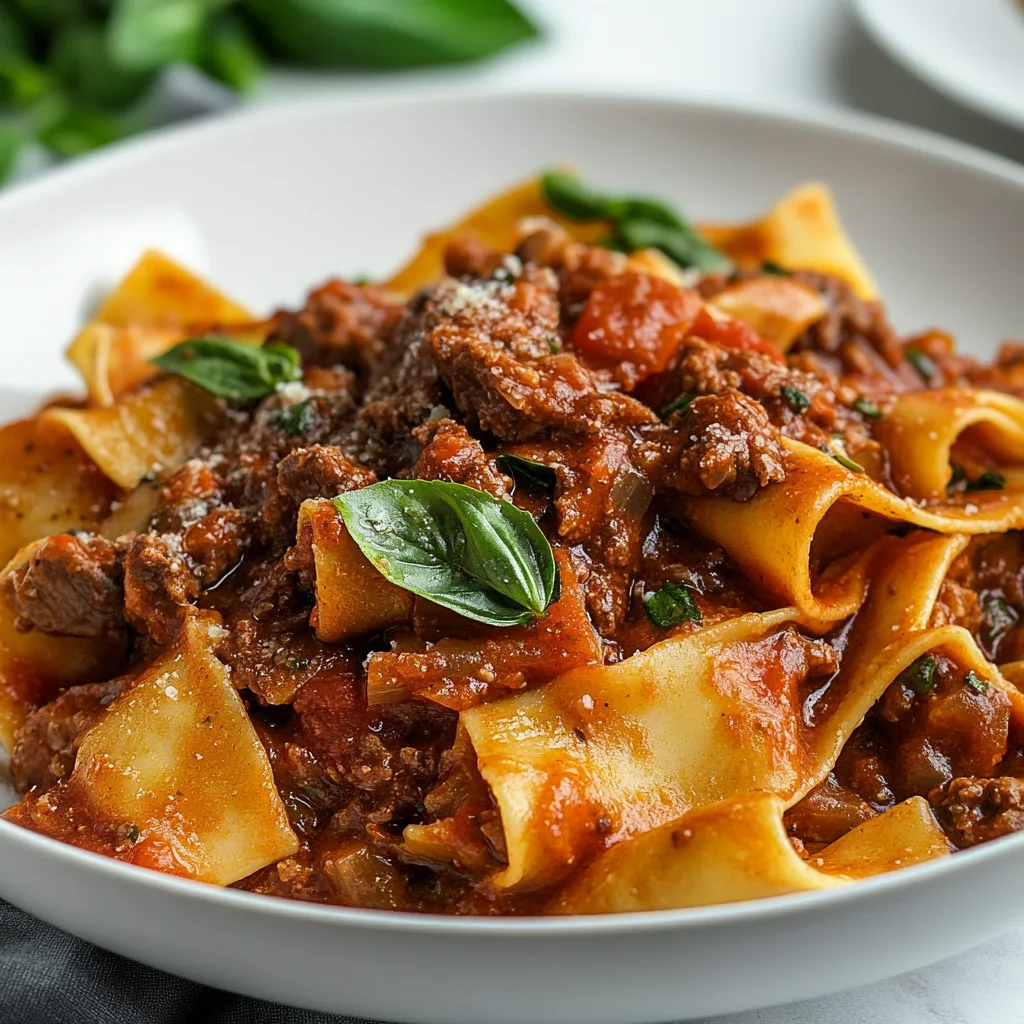
Slow Cooker Beef Ragu with Pappardelle has become my weekend ritual when I want the house filled with irresistible aromas without being chained to the kitchen. There’s something magical about the transformation that happens when beef slowly breaks down in a rich tomato sauce, becoming fork-tender and absolutely melty. I discovered this recipe during a rainy Sunday when I craved comfort but wanted to spend the day curled up with a book instead of hovering over the stove. The slow cooker did all the heavy lifting, and by dinner time, I had a restaurant-worthy meal that made everyone think I’d been cooking all day. Like my Crustless Quiche, it’s deceptively simple but tastes like you’ve put in hours of effort.
Table of Contents
Recipe
Print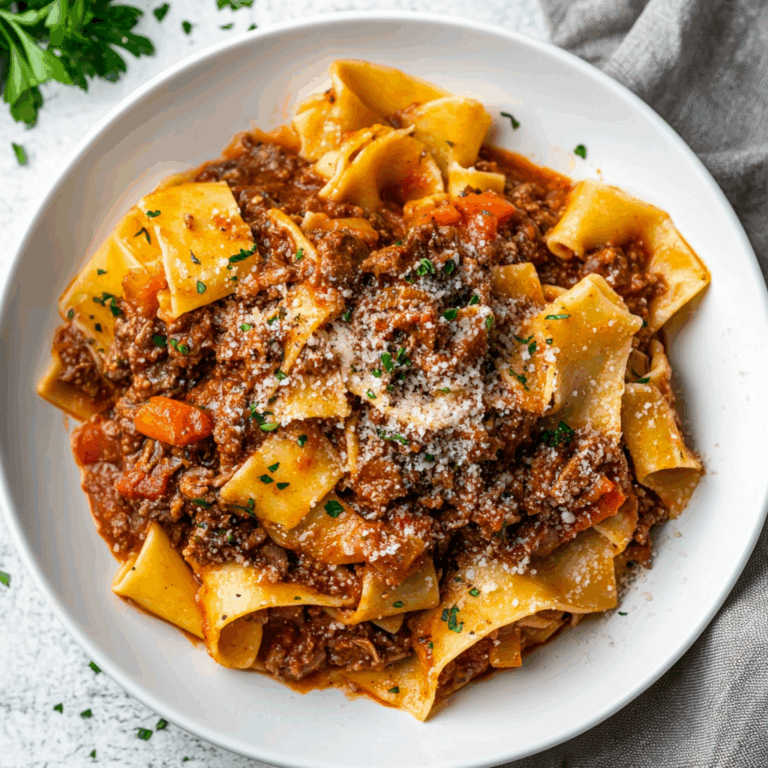
Slow Cooker Beef Ragu with Pappardelle | Easy Hearty Italian Dinner Recipe
This slow cooker beef ragu with pappardelle is rich, hearty, and irresistibly comforting. Tender shredded beef simmers in a tomato-garlic herb sauce until melt-in-your-mouth delicious—perfect for an easy Italian dinner.
- Total Time: 8 hours 20 minutes
- Yield: 6 servings 1x
Ingredients
2 1/2 pounds beef chuck roast, cut into large chunks
1 medium onion, finely chopped
2 carrots, finely chopped
2 celery stalks, finely chopped
4 cloves garlic, minced
2 tablespoons tomato paste
1 (28-ounce) can crushed tomatoes
1/2 cup beef broth
1/2 cup red wine (optional)
1 teaspoon dried oregano
1 teaspoon dried basil
1/2 teaspoon dried thyme
1 teaspoon salt
1/2 teaspoon black pepper
1 bay leaf
1–2 teaspoons sugar (optional)
12–16 ounces pappardelle pasta
Grated Parmesan cheese, for serving
Fresh basil or parsley, for garnish
Instructions
1. Place beef chunks in the slow cooker.
2. Add onions, carrots, celery, and garlic on top.
3. In a small bowl, whisk tomato paste, crushed tomatoes, broth, wine (if using), oregano, basil, thyme, salt, pepper, bay leaf, and sugar.
4. Pour mixture over the beef and vegetables.
5. Cover and cook on LOW for 8–9 hours or HIGH for 4–5 hours until beef is very tender.
6. Remove bay leaf and shred beef directly in the slow cooker; stir well.
7. Cook pappardelle according to package directions.
8. Serve ragu over pasta or toss pasta directly into the sauce.
9. Top with Parmesan and fresh herbs.
Notes
Searing the beef first adds deeper flavor.
This ragu tastes even better the next day.
Freezes well for up to 3 months—perfect meal prep.
- Prep Time: 20 minutes
- Cook Time: 8 hours
- Category: Dinner
- Method: Slow Cooker
- Cuisine: Italian
Nutrition
- Serving Size: 1 portion
- Calories: 550
- Sugar: 9g
- Sodium: 760mg
- Fat: 20g
- Saturated Fat: 7g
- Unsaturated Fat: 13g
- Trans Fat: 0g
- Carbohydrates: 57g
- Fiber: 5g
- Protein: 36g
- Cholesterol: 115mg
Keywords: slow cooker beef ragu, Italian dinner recipe, pappardelle ragu, hearty beef pasta, easy crockpot ragu
Why You’ll Love This Slow Cooker Beef Ragu with Pappardelle
Perfect Make-Ahead Comfort Food
This ragu is the definition of low-effort luxury. The beauty lies in its hands-off nature—just 20 minutes of prep in the morning rewards you with a dinner that tastes like it came from an Italian grandmother’s kitchen. I often prepare this on Saturday morning, then spend the day doing whatever I please while the slow cooker works its magic. The sauce develops incredible depth as it cooks, with each ingredient melding into a rich, velvety texture that clings beautifully to wide pappardelle ribbons. Plus, it actually tastes even better the next day, making it perfect for meal prep or when you’re hosting and want to minimize day-of cooking stress.
Budget-Friendly Yet Impressive
Using chuck roast or beef shoulder makes this dish incredibly cost-effective without sacrificing flavor. These affordable cuts actually work better than expensive ones because their collagen breaks down during slow cooking, creating that melt-in-your-mouth texture we crave. I’ve served this at dinner parties where guests assumed I’d splurged on expensive ingredients, never guessing the main component cost less than $15. The slow cooker transforms these humble ingredients into something truly special, extracting maximum flavor from aromatics like onions, carrots, and garlic. It’s proof that sometimes the most impressive dishes come from the simplest ingredients given time to shine.
Essential Tips & Tricks
The Perfect Sear Makes All the Difference
Don’t skip the initial browning step! Taking an extra 10 minutes to sear the beef before it goes into the slow cooker creates those delicious caramelized flavors that form the foundation of an exceptional ragu. I learned this the hard way after once tossing everything in raw—the difference was noticeable. Pat the meat dry with paper towels first (moisture is the enemy of a good sear), then work in batches to avoid overcrowding the pan. This creates the Maillard reaction that develops those complex, savory notes that make people go back for seconds. The same principle applies when making my Sausage Breakfast Casserole, where browning the sausage first elevates the entire dish.
Wine Selection Matters
The wine you choose can transform your ragu from good to extraordinary. I recommend using a medium-bodied red like Chianti, Merlot, or Sangiovese—something you’d actually enjoy drinking. The alcohol cooks off, but the flavor compounds remain, adding complexity and brightness to cut through the richness of the beef. Don’t worry about spending a fortune; a $10-12 bottle works perfectly. Just avoid anything labeled “cooking wine” which often contains salt and preservatives. If you prefer not to use alcohol, substitute with additional beef broth plus 1 tablespoon of balsamic vinegar to add that hint of acidity and depth that wine typically provides.
Serving Ideas & Creative Variations
Beyond Pappardelle
While traditional pappardelle is the classic pairing (those wide ribbons were made for catching chunks of tender beef), this versatile ragu works beautifully with various carb companions. Try it with creamy polenta for a gluten-free option that adds wonderful textural contrast—the soft, corn-based bed makes a perfect landing spot for the chunky sauce. Alternatively, spoon it over crispy roasted potatoes, stuff it into baked potatoes, or layer it into a rustic lasagna. I’ve even served it with crusty bread for a deconstructed sandwich that had everyone reaching for napkins but smiling through the mess. Like my Banana Bread, this recipe invites creative adaptations while maintaining its soul-warming essence.
Vegetable Boost Options
Transform this classic into a more nutritious one-pot meal by incorporating additional seasonal vegetables. In summer, I fold in diced zucchini or yellow squash during the final 30 minutes of cooking. For fall, butternut squash cubes add sweet notes that complement the savory meat beautifully. Spinach or kale stirred in just before serving wilts perfectly from the residual heat while adding color and nutrients. My personal favorite addition is roasted mushrooms (especially cremini or portobello), which I prepare separately and mix in at the end—they add an earthy umami quality that enhances the beef’s richness without getting lost in the long cooking process.
Storage & Troubleshooting Guide
Freezer-Friendly Meal Prep
This ragu is a freezer superstar, actually improving after being frozen as the flavors continue to meld. I often make a double batch specifically to freeze half for future busy nights. Cool the ragu completely before transferring to airtight containers or freezer bags (I prefer to freeze flat in bags for quicker thawing). Label with the date and freeze for up to 3 months. For best results, thaw overnight in the refrigerator, then reheat slowly on the stovetop with a splash of broth if needed to loosen the sauce. The pasta should always be cooked fresh—frozen and reheated pasta never maintains the right texture.
Fixing Common Issues
If your ragu turns out too watery, there’s an easy fix: remove the lid for the final 30-60 minutes of cooking time to allow excess liquid to evaporate. Alternatively, you can thicken it by making a quick slurry with 1 tablespoon cornstarch mixed with 2 tablespoons cold water, then stirring this into the hot ragu and cooking for another 15 minutes. If the sauce tastes flat or one-dimensional, brighten it with a splash of balsamic vinegar or a squeeze of lemon juice. Too acidic? A teaspoon of honey or sugar can balance it beautifully. Remember that beef should shred easily with a fork—if it’s still tough, it simply needs more time to break down.
Frequently Asked Questions
Can I make Slow Cooker Beef Ragu with Pappardelle in an Instant Pot?
Yes! Use the sauté function to brown the meat, then pressure cook on high for 45 minutes with natural release. The flavor won’t be quite as developed but still delicious.
What’s the best cut of beef to use?
Chuck roast, beef shoulder, or brisket work best as they have enough fat and connective tissue to become tender and flavorful during slow cooking.
Can I make this recipe dairy-free?
Absolutely! Skip the Parmesan or use a plant-based alternative. The ragu itself contains no dairy and is naturally rich without it.
How can I make this spicier?
Add red pepper flakes when sautéing the vegetables or stir in calabrian chili paste at the end for a more complex heat that complements the rich flavors.
Is this recipe gluten-free?
The ragu itself is gluten-free. Simply serve over polenta, gluten-free pasta, or roasted potatoes instead of traditional pappardelle for a complete gluten-free meal.
Final Thoughts
This Slow Cooker Beef Ragu with Pappardelle represents everything I love about cooking—transforming simple ingredients into something extraordinary through time and patience rather than complicated techniques. It’s become my signature dish for both family Sunday dinners and entertaining friends, always receiving the ultimate compliment: the scraping of plates and requests for seconds. There’s something deeply satisfying about creating a meal that brings people together around the table, faces illuminated with that special glow that only comes from truly good food. For more comfort food inspiration, visit my Pinterest boards.