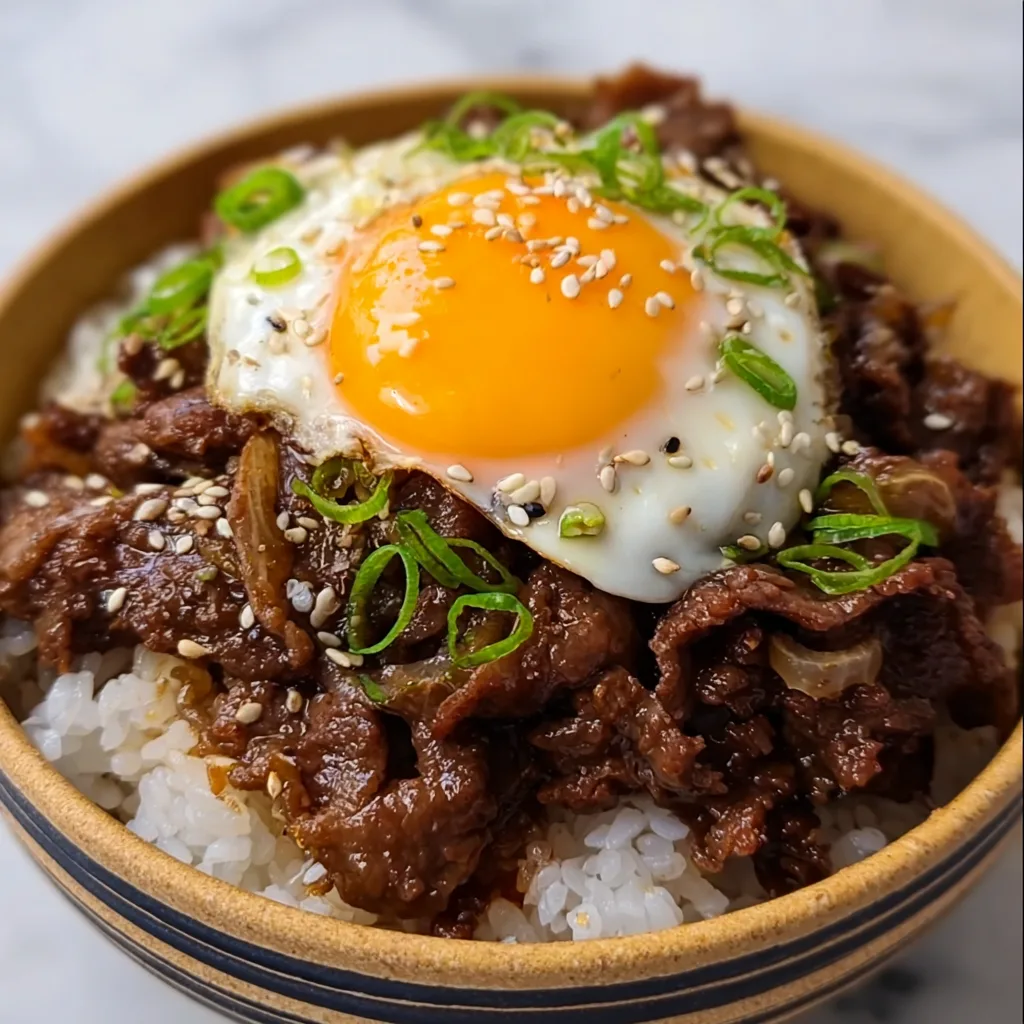
Gyudon (Japanese Beef Rice Bowl) is one of those magical comfort dishes that transforms simple ingredients into something extraordinary. The first time I made this at home, the aroma of sweet-savory beef simmering with onions transported me straight to a tiny Tokyo restaurant where I’d first tasted it years ago. There’s something deeply satisfying about tender slices of beef and onions simmered in a perfectly balanced sauce of soy, mirin, and sugar, all served over a steaming bowl of rice. If you’re craving a taste of Japanese comfort food that’s surprisingly easy to make at home, this gyudon recipe is about to become your new weeknight favorite.
Table of Contents
Recipe
Print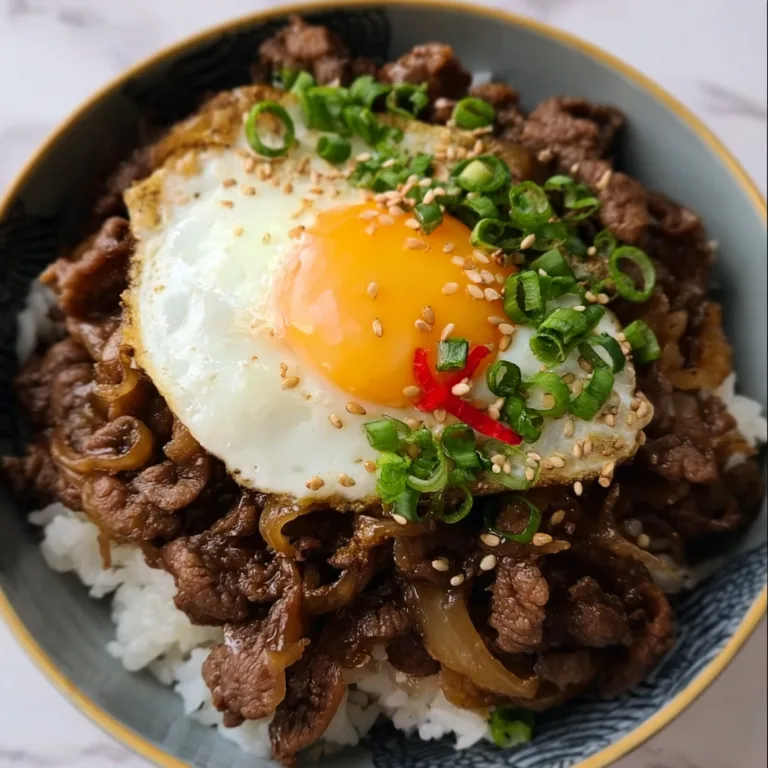
Authentic Gyudon Recipe | Japanese Beef Rice Bowl
This Authentic Gyudon (Japanese Beef Rice Bowl) is savory, slightly sweet, and incredibly comforting. Thinly sliced beef is simmered with onions in a flavorful sauce and served over steamed rice for a quick and delicious meal.
- Total Time: 25 minutes
- Yield: 2 servings 1x
Ingredients
For the Beef:
300 g thinly sliced beef
1 small onion (sliced)
For the Sauce:
1/2 cup beef broth
2 tablespoons soy sauce
1 tablespoon mirin (or sugar substitute)
1 tablespoon sugar
1 teaspoon grated ginger
For Serving:
2 cups cooked white rice
Optional:
Soft cooked egg
Green onions
Pickled ginger
Instructions
1. In a pan, combine beef broth, soy sauce, mirin, sugar, and ginger.
2. Add sliced onions and simmer for 3–4 minutes until soft.
3. Add thinly sliced beef and cook until tender.
4. Simmer for a few minutes until flavors combine.
5. Serve hot over a bowl of steamed rice.
6. Top with soft egg, green onions, or pickled ginger if desired.
Notes
Use very thinly sliced beef for best texture.
Do not overcook beef to keep it tender.
Adjust sweetness to taste.
Serve immediately for best flavor.
- Prep Time: 10 minutes
- Cook Time: 15 minutes
- Category: Main Course
- Method: Stovetop
- Cuisine: Japanese
Nutrition
- Serving Size: 1 bowl
- Calories: 520
- Sugar: 6 g
- Sodium: 720 mg
- Fat: 18 g
- Saturated Fat: 6 g
- Unsaturated Fat: 10 g
- Trans Fat: 0 g
- Carbohydrates: 52 g
- Fiber: 2 g
- Protein: 34 g
- Cholesterol: 75 mg
Keywords: gyudon recipe, japanese beef rice bowl, easy gyudon, beef and rice japanese, quick asian beef bowl
Why You’ll Love This Gyudon (Japanese Beef Rice Bowl)
Quick and Satisfying Weeknight Dinner
This gyudon recipe has saved me on countless busy evenings when I needed something delicious without spending hours in the kitchen. The entire dish comes together in about 25 minutes, making it faster than takeout but with all the satisfaction of a home-cooked meal. The thinly sliced beef cooks quickly, soaking up all those wonderful flavors as it simmers. I love how the sweet-savory sauce creates this incredible glaze that coats every bite. Plus, the one-pan preparation means minimal cleanup – something I always appreciate when I’m exhausted after a long day but still want a proper, comforting dinner.
Authentic Flavors with Accessible Ingredients
What makes gyudon so special is how it delivers authentic Japanese flavors without requiring a pantry full of specialty ingredients. The umami-rich sauce combines simple elements – soy sauce, mirin (or a substitute), sugar, and dashi – that create that distinctive Japanese flavor profile. While traditional gyudon uses thinly sliced ribeye or chuck, I’ve found that even regular grocery store beef works beautifully when sliced thin. The onions become deliciously sweet and tender as they simmer, balancing the richness of the beef. This accessibility means you can enjoy restaurant-quality Japanese cuisine without hunting down rare ingredients.
Essential Tips & Tricks
Mastering the Perfect Beef Texture
The secret to exceptional gyudon lies in the beef preparation. For the most tender results, place your beef in the freezer for about 30 minutes before slicing – this firms it up just enough to create those signature paper-thin slices. Cut against the grain to ensure each bite practically melts in your mouth. I learned this technique after several too-chewy attempts, and it transformed my gyudon completely! When cooking, resist the urge to overcook the beef; it should retain some pinkness when you add it to the simmering sauce, as it will continue cooking as it absorbs those delicious flavors.
Creating Balanced Flavor Depth
The soul of gyudon is its perfectly balanced sauce that delivers sweet, savory, and umami notes in every bite. For the most authentic flavor profile, use dashi stock as your base (instant dashi powder works wonderfully). If you don’t have mirin, a mixture of rice vinegar with a touch of sugar creates a similar effect. I always add a splash of sake if I have it on hand – it adds this subtle complexity that elevates the entire dish. Remember to let the sauce reduce slightly before serving; this concentrates the flavors and creates that signature glaze that coats each slice of beef and onion.
Serving Ideas & Creative Variations
Traditional and Modern Accompaniments
Serve your gyudon in a deep bowl with the beef and sauce ladled over short-grain Japanese rice. Traditionally, a raw or soft-boiled egg is placed on top, where the heat from the beef gently warms it, creating a luscious, creamy element when stirred through. I love adding thinly sliced scallions and a sprinkle of toasted sesame seeds for color and texture. For a complete meal, serve with a side of miso soup and simple pickled vegetables like cucumber or daikon. The contrast of the warm, rich gyudon with cool, tangy pickles creates a perfectly balanced meal.
Exciting Fusion Twists
While traditional gyudon is perfect as is, I’ve experimented with several delicious variations over the years. Try adding thinly sliced mushrooms or bell peppers to the onions for extra vegetables and flavor complexity. For a spicy kick, add a dollop of chili oil or a sprinkle of shichimi togarashi (Japanese seven-spice blend). I’ve even created a gyudon bowl version with additional toppings like avocado, kimchi, or quick-pickled vegetables arranged artfully on top. For a low-carb option, serve over cauliflower rice or alongside a fresh green salad instead of traditional white rice.
Storage & Troubleshooting Guide
Proper Storage and Reheating
Gyudon stores remarkably well, making it perfect for meal prep or leftovers. Store the beef and sauce mixture separately from the rice in airtight containers in the refrigerator for up to 3 days. When reheating, add a small splash of water to the beef mixture to prevent it from drying out, then gently warm in a covered pan over medium-low heat until just heated through. I find the flavors sometimes deepen overnight, making day-two gyudon even more delicious! For freezing, the beef portion freezes well for up to 2 months – just thaw overnight in the refrigerator before reheating.
Common Issues and Easy Fixes
If your sauce is too watery, simply increase the heat and reduce it further until it reaches that perfect glazing consistency. For sauce that’s too strong or salty, add a little water or a touch of sugar to balance the flavors. If your beef turned out tough, it’s likely either sliced too thick or overcooked – next time, focus on those paper-thin slices and shorter cooking time. Should your onions still have too much bite, simply cook them a few minutes longer before adding the beef. Remember that quality ingredients make a difference – using good soy sauce and fresh beef will elevate your gyudon significantly.
Frequently Asked Questions
What cut of beef is best for authentic Gyudon?
Thinly sliced ribeye or chuck steak is traditional. For budget options, sirloin works well too. The key is slicing it paper-thin against the grain for tenderness.
Can I make Gyudon without mirin?
Yes! Substitute with 1 tablespoon rice vinegar mixed with 1 teaspoon sugar for every tablespoon of mirin needed in your recipe.
How do I slice beef thin enough for Gyudon?
Partially freeze beef for 30 minutes, then use a very sharp knife to slice against the grain. Many Asian markets also sell pre-sliced beef perfect for this dish.
What can I substitute for dashi in Gyudon?
Use low-sodium beef or chicken broth with a small piece of kombu seaweed or a teaspoon of fish sauce to add umami depth.
Is Gyudon (Japanese Beef Rice Bowl) healthy?
Moderately so. It provides protein and can be made healthier by using lean beef, reducing sugar, and serving with vegetables or a side salad.
Final Thoughts
There’s something magical about how Gyudon (Japanese Beef Rice Bowl) transforms simple ingredients into a dish that feels like a warm hug in food form. The combination of tender beef, sweet onions, and that irresistible savory-sweet sauce creates a perfectly balanced meal that satisfies on the deepest level. Whether you’re cooking for yourself after a long day or sharing with loved ones, this dish brings authentic Japanese flavors to your table with minimal effort. Find more comforting recipes like this on my Pinterest boards for your next culinary adventure!